Hexagram structure
Yi Wood Day Master (乙木) in BaZi: Flexibility, Climbing Support, and Sunlight Balance
Explore the Yi Wood Day Master in BaZi. Learn how classical texts analyze its flexibility, seasonal needs, and symbolic climbing nature.
The short answer
The Yi Wood Day Master represents yin wood, symbolizing vines, flowers, and flexible vegetation. According to classical BaZi, its structural balance depends heavily on seasonal context, requiring appropriate sunlight (Bing Fire) and moisture (Gui Water), as well as the presence of sturdy support (Jia Wood) to thrive.
Introduction to the Yi Wood Day Master
In the structural framework of BaZi, the Day Master (the Heavenly Stem of the day pillar) represents the core symbolic archetype of a chart. The Yi Wood (乙木) Day Master is the second of the ten Heavenly Stems, embodying the yin polarity of the Wood element.
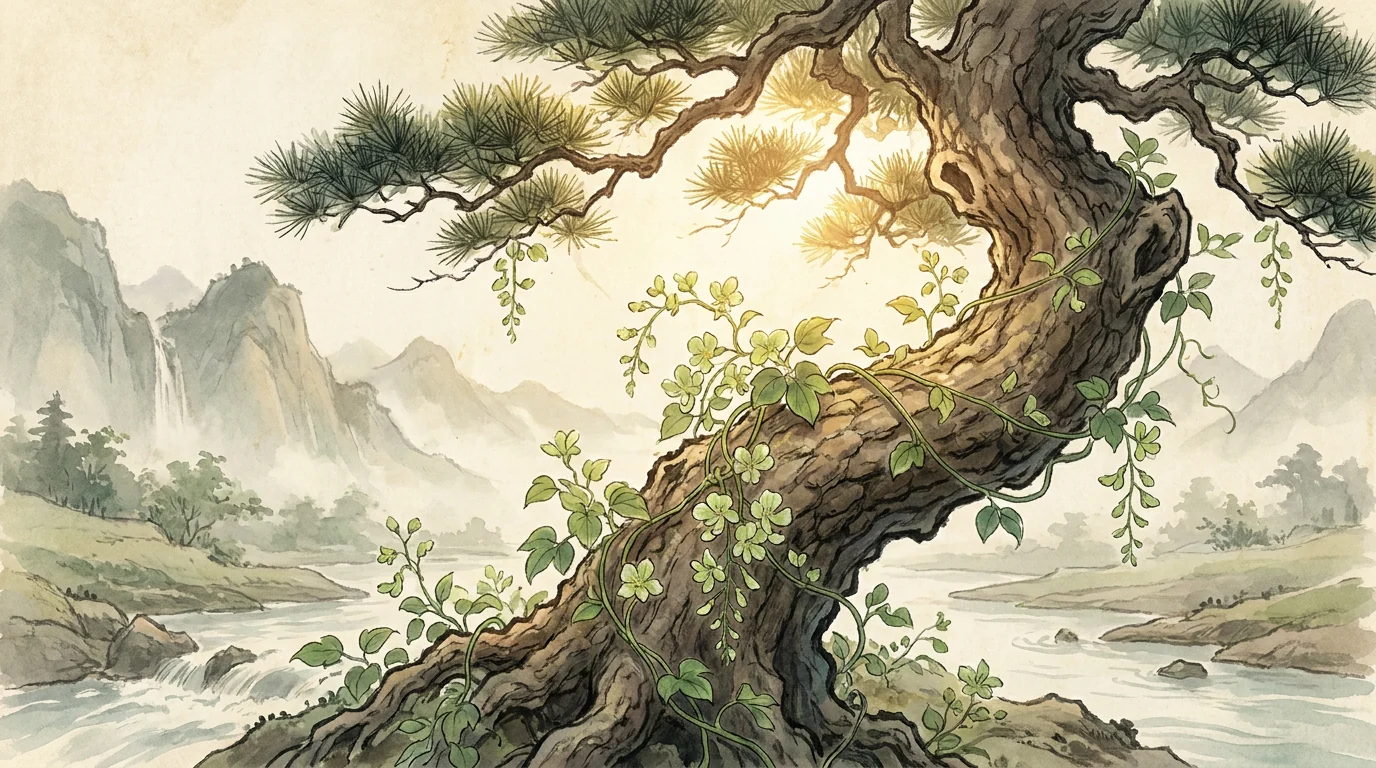
While Jia Wood (甲木) is likened to towering, rigid timber, Yi Wood is traditionally associated with delicate flowers, pliant grasses, and climbing vines. However, describing Yi Wood as merely 'weak' is a fundamental misunderstanding of classical BaZi principles. Yi Wood represents resilience, adaptability, and the quiet persistence of nature. It survives strong winds by bending rather than breaking, illustrating a profound structural flexibility.
Classical Foundations: Di Tian Sui and Qiong Tong Bao Jian
The understanding of Yi Wood is deeply rooted in pre-1912 public-domain classics. The Di Tian Sui (滴天髓) famously states: "Yi Wood, though soft, can butcher the sheep and dissect the ox" (乙木雖柔,刲羊解牛). The 'sheep' (Wei 未) and 'ox' (Chou 丑) represent Earthly Branches associated with Earth. This poetic line signifies that despite its apparent softness, Yi Wood possesses the penetrating power to root into the hardest soil and access hidden resources.
The Qiong Tong Bao Jian (窮通寶鑑) adds a layer of seasonal dependency. It emphasizes that Yi Wood's structural vitality is entirely dependent on its environment. It needs Gui Water (癸水) for nourishment, like morning dew on leaves, and Bing Fire (丙火) for photosynthesis and warmth, particularly to facilitate its blooming process.
The Concept of 'Teng Luo Xi Jia' (Vines Clinging to the Pine)
One of the most celebrated structural configurations for a Yi Wood Day Master is 'Teng Luo Xi Jia' (藤蘿繫甲), which translates to 'vines clinging to the pine' or 'wisteria wrapped around Jia Wood'.
- The Mechanism: This occurs when a Yi Wood chart contains Jia Wood (either in the Heavenly Stems or rooted in the Earthly Branches like Yin 寅).
- The Symbolism: The vine, unable to grow tall on its own, leverages the sturdy structure of the Jia Wood tree to reach the sunlight canopy.
- The Reflection: In classical interpretation, this represents a structural capacity for collaboration, finding strong mentorship, or effectively utilizing established frameworks to achieve one's potential. It highlights survival through symbiosis rather than solitary struggle.
Seasonal Dynamics: Spring vs. Autumn Yi Wood
The structural needs of Yi Wood shift dramatically depending on the month of birth, demonstrating the calendrical nature of BaZi.
Spring Yi Wood (Mao Month) Born in the peak of the Wood season, Spring Yi Wood is vibrant and full of life. According to the Qiong Tong Bao Jian, its primary need is Bing Fire (Sunlight) to allow the flowers to bloom and prevent the wood from becoming overly damp or crowded.
Autumn Yi Wood (You Month) Born in the season of Metal, Autumn Yi Wood faces the symbolic 'pruning shears'. The classical texts suggest that to survive this harsh environment, it requires Gui Water (Moisture) to nourish its roots and Ding Fire (丁火) to control the sharp Metal energy, preserving the vitality of the plant.
Synthetic Chart Case Studies
| Feature | Synthetic Chart A (Spring) | Synthetic Chart B (Autumn) |
|---|---|---|
| Birth Info | 1992-03-10 11:30 | 1992-09-16 21:30 |
| Day Master | Yi Wood (乙) | Yi Wood (乙) |
| Month Branch | Mao (卯) - Spring/Wood | You (酉) - Autumn/Metal |
| Structure | Born in the vigorous Spring, supported by Ren/Gui Water. | Born in the sharp Autumn, surrounded by Earth and Metal. |
| Classical Focus | Needs the Wu Fire (午) in the hour pillar to provide warmth and allow the vigorous wood to express its vitality. | Relies on the Hai Water (亥) and Ding Fire (丁) in the hour pillar to mitigate the strong Metal energy of the You month. |
To illustrate these seasonal differences, let's examine two synthetic charts generated by the YiInsight deterministic civil-time engine. Note: These are synthetic educational models, not real individuals, and are used solely for structural analysis.
Chart A represents a well-watered plant in spring seeking sunlight to bloom, whereas Chart B represents a delicate plant in autumn needing protective warmth and root nourishment to endure the harvest season.
Common Misconceptions
When studying classical BaZi, several misconceptions about Yi Wood often arise:
- Yi Wood is Weak: The term 'Yin Wood' refers to polarity and quality, not absolute strength. Yi Wood's strength lies in adaptability, not rigidity.
- Jia Wood is Always Better: Neither stem is superior. Jia Wood can snap under extreme pressure, while Yi Wood bends and survives. They represent different structural strategies.
- Deterministic Outcomes: Having or lacking Bing Fire or Jia Wood does not guarantee success or failure. These are symbolic lenses for understanding one's disposition and approach to environmental factors, encouraging self-reflection rather than fatalism.
FAQ
Q: What does the Yi Wood Day Master represent in classical BaZi? A: It represents yin wood, symbolizing flexible vegetation, vines, and flowers. It is characterized by adaptability, resilience, and a tendency to seek collaborative support.
Q: What is the meaning of 'Teng Luo Xi Jia'? A: It translates to 'vines clinging to the pine'. In BaZi, it describes a chart where Yi Wood is supported by Jia Wood, symbolizing the ability to leverage external structures or mentorship to reach one's potential.
Q: How does the season of birth affect Yi Wood? A: The season dictates the structural needs of the chart. Spring Yi Wood generally requires sunlight (Fire) to bloom, while Autumn Yi Wood requires moisture (Water) and warmth to endure the restrictive Metal energy of the season.
Inspect your deterministic Four Pillars
Enter a birth date and local time zone to view your Four Pillars and Dayun structure cleanly.
Open BaZi Calculator →