Hexagram structure
Bing Fire Day Master (丙火) in BaZi: Radiant Output, Reflecting Water, and Overheating Limits
Explore the symbolic meaning of the Bing Fire Day Master in BaZi. Learn how classical calendrical frameworks view its radiant energy and seasonal balance.
The short answer
In BaZi, the Bing Fire Day Master symbolizes the radiant, expansive energy of the sun. Its optimal state often involves balancing its intense heat with Water to create clarity and reflection, while carefully managing its tendency to overheat during the summer months.
Introduction: The Nature of Bing Fire
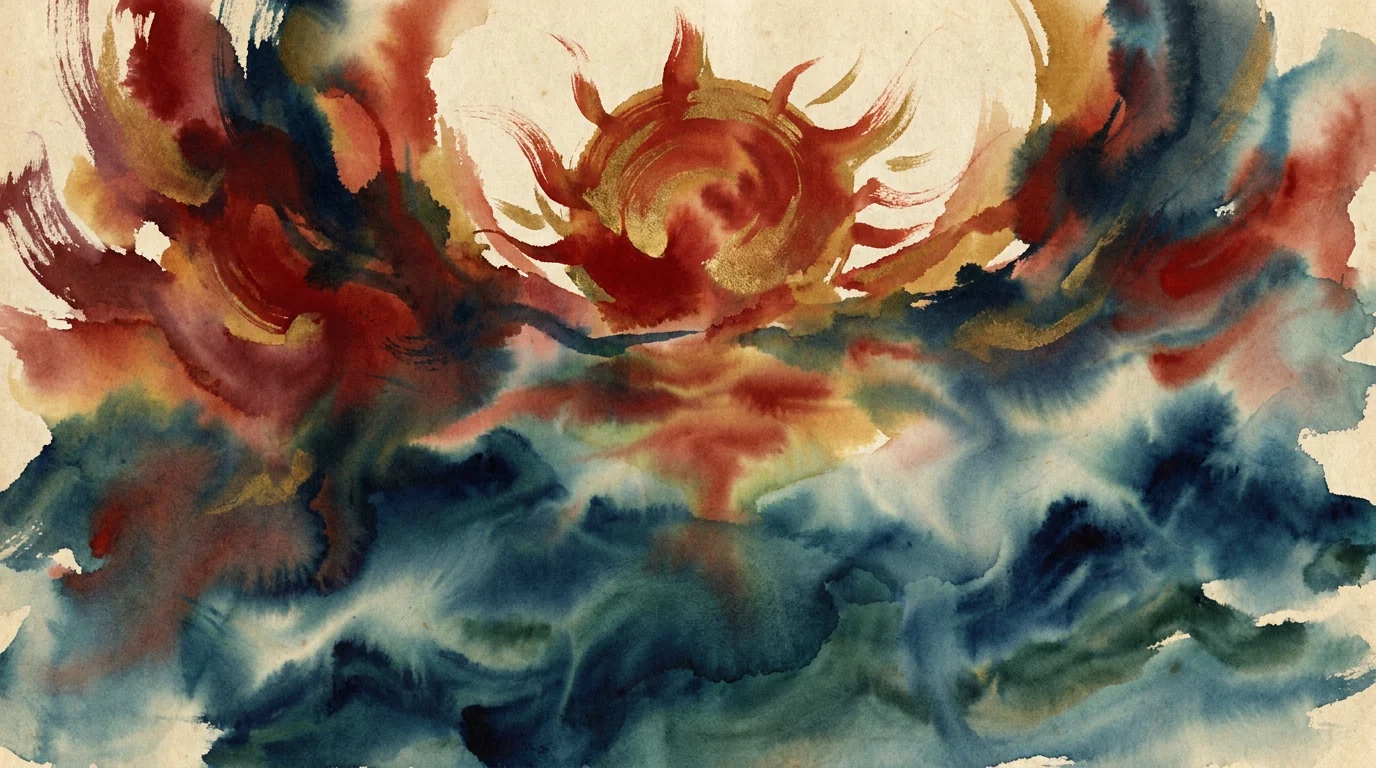
In the classical BaZi framework, the Heavenly Stems represent fundamental archetypes of elemental energy. Bing (丙), the Yang Fire stem, is universally compared to the sun—radiant, intense, and far-reaching. The classical Ming Dynasty text Di Tian Sui (滴天髓) states: 'Bing Fire is fierce and radiant; it despises frost and snow.' This poetic description captures the essence of Bing Fire: an unstoppable force of illumination that seeks to warm and reveal.
As a Day Master, Bing Fire represents a conceptual framework of output, visibility, and vitality. The study of Bing Fire focuses not on predicting character or specific life events, but on understanding how this intense outward energy balances with the surrounding elements in a calendrical chart. Proper structural balance is essential to prevent this energy from becoming overwhelming or burning out.
The Importance of Reflection: Water and Fire Balance
One of the most profound concepts in BaZi structural analysis is the interaction between Bing Fire and Yang Water (Ren, 壬). While common intuition might suggest that Water simply extinguishes Fire, classical texts like Qiong Tong Bao Jian (窮通寶鑑) present a more nuanced view for Bing Fire.
When Bing Fire encounters Ren Water, it creates a structure symbolically known as 'the sun reflecting on the river' (日照江河). Instead of being destroyed, the sun's light is magnified and given a clear, reflective surface. In a chart, this dynamic signifies:
- Clarity of Purpose: The intense outward energy of Fire is organized and focused by the stabilizing depth of Water.
- Balanced Output: The reflective nature of Water provides a boundary, ensuring that the Fire's radiance is distributed evenly rather than burning destructively.
- Equilibrium: This interaction represents the ideal of 'Shui Huo Ji Ji' (水火既濟), the harmonious completion and balance of opposing forces.
Seasonal Analysis: Summer Heat vs. Winter Survival
The month of birth (the earthly branch of the month pillar) dictates the seasonal context of the Day Master. For Bing Fire, the contrast between Summer and Winter is stark and requires different structural compensations.
Summer Bing Fire (Si and Wu Months) Born in early or mid-summer, Bing Fire is at its peak intensity. The primary concern is overheating. If the chart accumulates too much Wood and Fire without regulating elements, it symbolizes a blazing, arid environment. In these structures, the presence of Metal to provide form, Earth to safely vent the heat, or Water to cool the system becomes the focal point of the chart's equilibrium.
Winter Bing Fire (Hai and Zi Months) In the depths of winter, Bing Fire's natural environment is cold and restrictive. However, true to its nature, the sun never truly disappears; it merely shines from a lower angle. Winter Bing Fire relies on the presence of Wood (Jia) to continuously fuel it, ensuring that its vital warmth is maintained amidst the freezing conditions. It is a symbol of resilience and the preservation of light in dark times.
Synthetic Chart Comparison: Summer vs. Winter Bing Fire
| Pillar | Chart A: Summer Bing Fire (May 1993) | Chart B: Winter Bing Fire (Nov 1993) |
|---|---|---|
| Year | Gui You (癸酉) | Gui You (癸酉) |
| Month | Ding Si (丁巳) | Gui Hai (癸亥) |
| Day | Bing Shen (丙申) | Bing Shen (丙申) |
| Hour | Ji Hai (己亥) | Gui Si (癸巳) |
To illustrate these seasonal dynamics, let us examine two verified synthetic charts. Note: These are calendrical models for educational purposes only and do not represent actual individuals or guarantee outcomes.
Analysis of Chart A (Summer): Born in the Si (巳) month, this Bing Fire is inherently strong and vibrant. The presence of Ding Fire in the month stem adds to the heat. However, the chart is well-regulated. The Ji (己) Earth in the hour pillar helps to vent the excess Fire, while the Shen (申), You (酉) Metal, and Gui/Hai (癸/亥) Water provide the necessary cooling structure to prevent overheating. It is a chart of dynamic energy managed by practical boundaries.
Analysis of Chart B (Winter): Born in the Hai (亥) month, this Bing Fire faces a profoundly different environment. Surrounded by Gui Water (癸) in the year, month, and hour stems, the chart is dominated by cold and fluid energy. The Bing Day Master relies heavily on its root in the Si (巳) branch of the hour pillar to maintain its warmth. This structure illustrates the concept of preserving light under pressure, highlighting a framework that requires internal resilience rather than outward expansion.
Common Misconceptions and FAQ
- Does Bing Fire always need Wood to survive? Not necessarily. While Wood provides fuel, a Bing Fire born in the height of summer may actually find Wood detrimental, as it adds to an already overbearing heat. Context is always key.
- Is strong Fire always good? In classical BaZi, extreme strength without regulation is viewed as a structural flaw. An overly strong Bing Fire without Earth to vent or Water to balance signifies an environment that burns too hot, lacking sustainability.
- Can BaZi predict my success if I am a Bing Fire? No. BaZi is a calendrical framework that maps elemental symbols. It offers a structured way to reflect on natural cycles and tendencies (like balancing action with reflection), but it does not dictate deterministic outcomes, financial success, or health.
Inspect your deterministic Four Pillars
Enter a birth date and local time zone to view your Four Pillars and Dayun structure cleanly.
Open BaZi Calculator →