Hexagram structure
Winter Wood Needs Warmth: How Seasonal Climate (Tiaohou) Shapes Cold-Season BaZi Charts
Explore the classical BaZi concept of Tiaohou (seasonal climate) through Qiong Tong Bao Jian, revealing why Winter Wood relies on Fire for vitality and balance.
The short answer
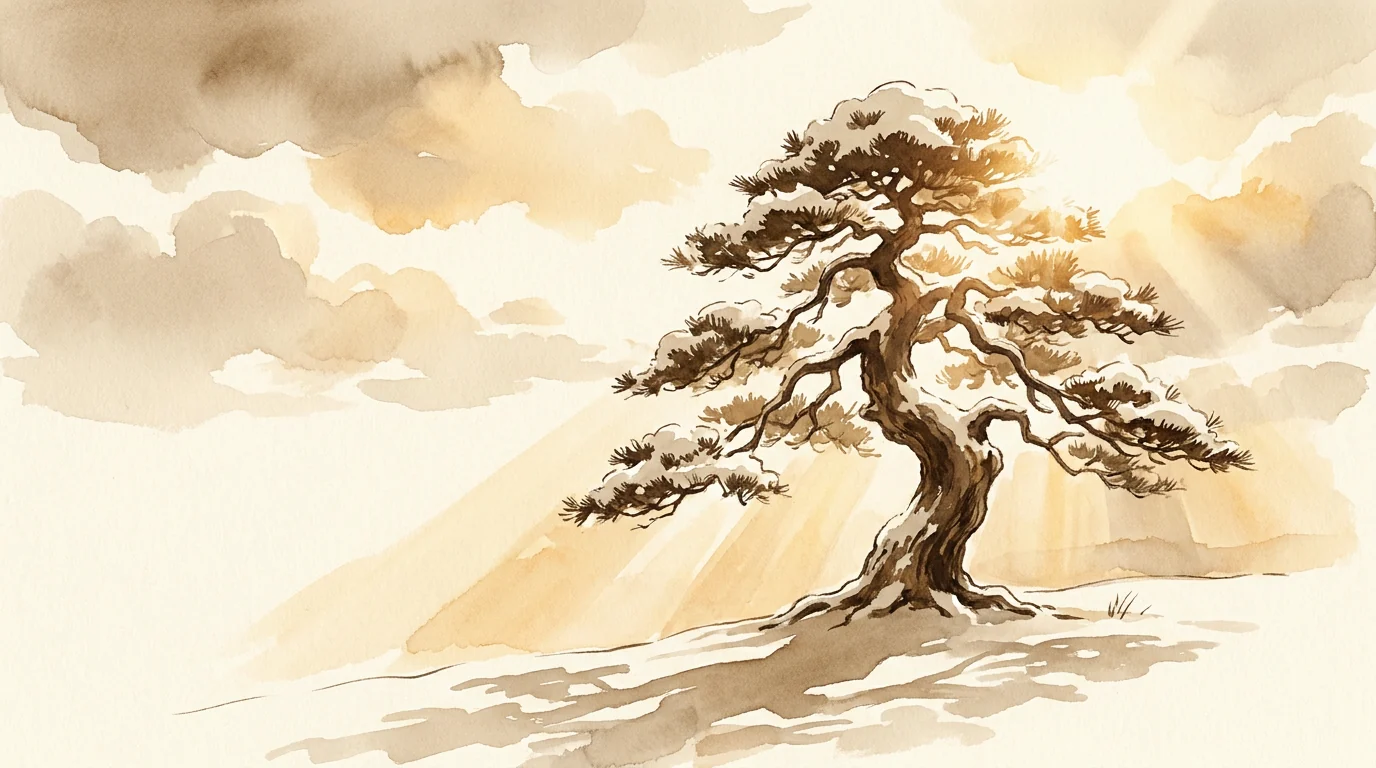
In classical BaZi, Yang Wood (Jia) born in winter faces freezing conditions. The concept of Tiaohou emphasizes the need for warmth (Fire) to melt the ice, allowing the Wood to thrive and circulate its vitality, symbolizing the importance of proper timing and environment.
Introduction to Tiaohou (Seasonal Climate)
In classical BaZi, elements are not static building blocks; they are deeply tied to the rhythms of nature and the shifting of seasons. This brings us to a cornerstone concept known as Tiaohou, which translates roughly to 'climate regulation' or 'temperature adjustment.' When interpreting a BaZi chart, classical scholars recognized that the raw strength of an element is less relevant if the environment is inhospitable. For example, a seed might have immense potential, but if planted in frozen soil, it cannot sprout. Tiaohou addresses the environmental temperature of the chart, ensuring that elements can interact dynamically rather than remaining stagnant.
The Wisdom of Qiong Tong Bao Jian
The classical text Qiong Tong Bao Jian (The Essential Guide to Nature's Flow) places immense emphasis on the seasons. Unlike other foundational texts that primarily focus on structural strength or elemental clashes, Qiong Tong Bao Jian evaluates every Day Master (the core self element) by the specific month of birth. According to this Qing Dynasty classic, Yang Wood (Jia) born in the Rat (Zi) month is situated in the dead of winter. The text poeticizes this as 'cold wood and freezing water.' In this state, water does not nourish wood; instead, it turns to ice and damages the roots. Therefore, the absolute first priority is to introduce Fire to warm the environment.
Analyzing Winter Wood: The Freeze
Imagine a towering pine tree in late December. The ground is covered in frost, the sap has stopped flowing, and the tree is in a state of hibernation. In BaZi symbolism, this represents an individual or a phase of life characterized by high potential but lacking the environmental catalyst to act. If a chart has excessive Water and Metal during this season without Fire, it creates a 'cold and bitter' aesthetic. Symbolically, this reflects scenarios where resources (Water) are abundant but inaccessible because they are frozen, requiring patience, inner warmth, or seeking external environments that provide 'sunlight' to unlock one's capabilities.
Synthetic Chart Comparison: A Tale of Two Hours
| Feature | Chart A (Noon Hour) | Chart B (Midnight Hour) |
|---|---|---|
| Birth Hour | Geng Wu (庚午) | Jia Zi (甲子) |
| Dominant Energy | Fire at Noon (Wu) | Water at Midnight (Zi) |
| Tiaohou Status | Warmth introduced | Deep freeze intensified |
| Symbolic State | Sunlight melting the snow | A dark, freezing winter night |
To understand Tiaohou practically, let us look at two synthetically generated charts. Both share the exact same Year, Month, and Day pillars, meaning they both feature a Yang Wood (Jia) Day Master born in the frozen Rat (Zi) month. The only difference is the hour of birth.
In Chart A, the Wu (Horse) hour brings the much-needed Fire element. Classical thought considers this chart aesthetically balanced because the 'sun' has risen, thawing the frozen water and allowing it to safely nourish the wood. In Chart B, the Zi (Rat) hour piles more cold water onto the already freezing foundation. Without Fire, the chart remains dormant, symbolically suggesting a reliance on later life periods (Dayun) or external partnerships to provide the missing warmth.
The Symbolic Role of Fire (Bing/Ding)
Fire in a winter chart is more than just an element; it is a catalyst for life. Bing Fire represents the sun in the sky—a widespread, ambient warmth that lifts the coldness of the entire landscape. Ding Fire represents the forge or the hearth—a concentrated, human-made warmth that provides focused energy. From a reflective standpoint, 'Fire' can symbolize passion, visibility, optimism, social connection, or a proactive mindset. When someone feels 'stuck' or 'frozen' in a particular life situation, cultivating their symbolic Fire—by stepping into the light, engaging with community, or finding a passion project—can be a powerful way to thaw the stagnation and restore the flow of their natural talents.
Frequently Asked Questions
Does 'Winter Wood' mean someone will have a difficult life? No. BaZi is a symbolic map of nature, not a deterministic life sentence. A 'cold' chart simply suggests that the individual's baseline environment might require more active cultivation of 'warmth'—such as seeking out optimistic environments, passionate pursuits, or supportive communities.
Can a chart change its temperature? The natal chart remains static, representing the starting point. However, the dynamic ten-year pillars (Dayun) simulate the passage of time and shifting seasons. A winter chart moving into spring and summer pillars conceptually experiences a 'thaw' and blossoming.
Inspect your deterministic Four Pillars
Enter a birth date and local time zone to view your Four Pillars and Dayun structure cleanly.
Open BaZi Calculator →