Hexagram structure
Damp Earth vs. Dry Earth: Why Wu Earth Day Masters Respond Differently Across Seasons
Explore how Wu Earth Day Masters react to seasonal shifts in the BaZi framework, contrasting the dry heat of Wei month with the damp cold of Zi month.
The short answer
In the BaZi framework, Wu Earth represents grand, foundational terrain. Its symbolic capacity to nurture life depends heavily on seasonal conditions: dry summer months create scorched earth requiring water to cool, while cold winter months create frozen earth requiring fire to warm and activate its potential.
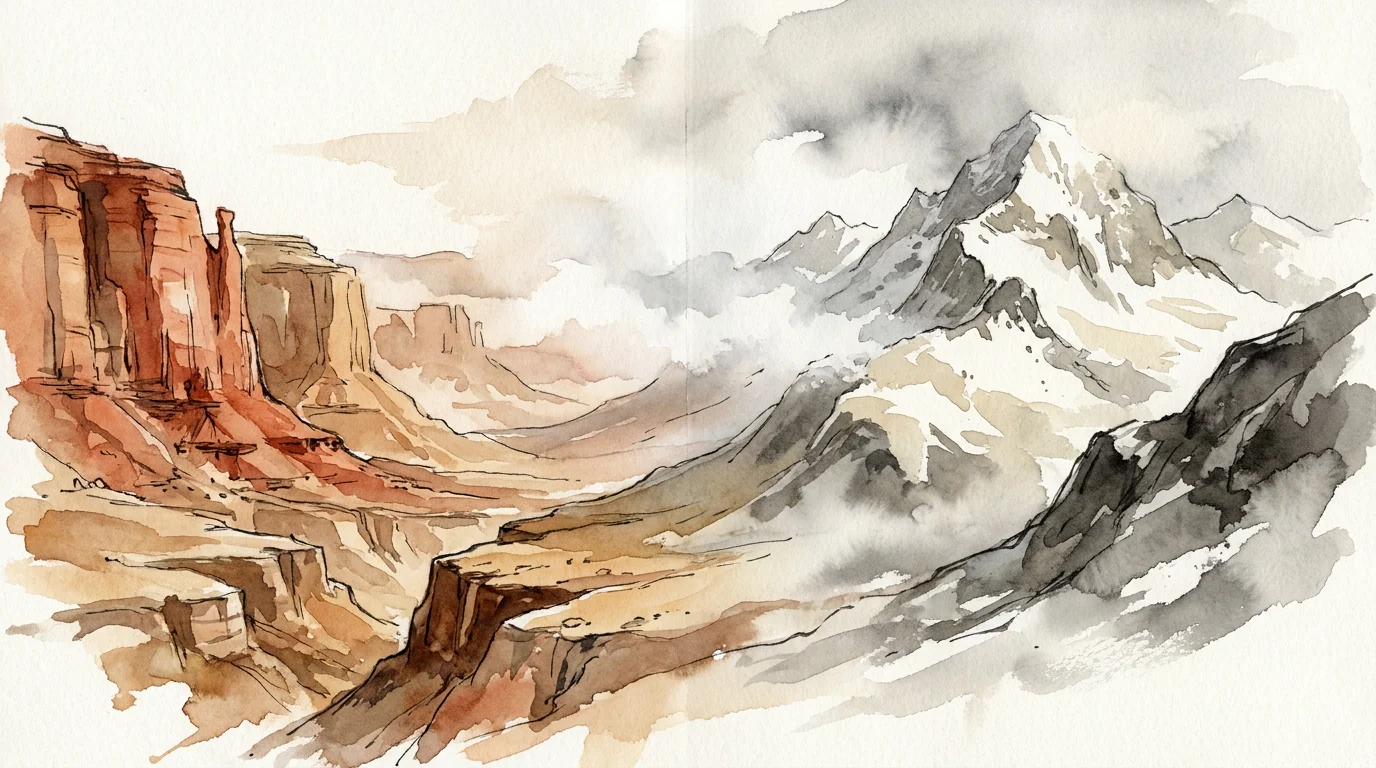
The Essence of Wu Earth in the BaZi System
In traditional BaZi theory, Wu (戊) is Yang Earth, conceptually likened to towering mountains, massive boulders, or expansive plateaus. Unlike Yin Earth (Ji 己), which is akin to soft garden soil, Wu Earth is characterized by its solidity and scale. However, the classical texts emphasize that mountains and terrains are deeply affected by the climate. The season in which a Wu Earth Day Master is born dictates its 'temperature' and 'humidity,' fundamentally shifting its structural needs and symbolic tendencies.
The Classical Perspective: Di Tian Sui
The classical text Di Tian Sui (《滴天髓》) establishes a clear doctrine for interpreting Earth. It notes that Wu Earth must be understood through the lens of climatic adjustment, a concept known as Tiao Hou (調候). The text explains that if Wu Earth is born in the peak of summer, it becomes scorched and cracked, unable to nurture life unless cooled by Water. Conversely, if born in the depths of winter, it becomes cold and frozen, remaining dormant until thawed by the warmth of Fire.
Scorched Terrain: Analyzing Synthetic Chart A (Wei Month)
Let us examine Synthetic Chart A, representing a Wu Earth Day Master born in the Wei (未) month of late summer:
- Year: Jia Xu (甲戌)
- Month: Xin Wei (辛未)
- Day: Wu Xu (戊戌)
- Hour: Ji Wei (己未)
In this configuration, the chart is heavily dominated by dry Earth branches (Xu and Wei). The late summer heat scorches the Wu Earth, creating a symbolic landscape of a dry, cracked desert. The classical remedy for such a structural configuration is moisture. Without the presence of Water to cool the system, the terrain remains arid. Individuals with similar patterns might conceptually benefit from 'cooling' environments or pursuing paths that introduce flexibility and flow into their solid, but perhaps overly rigid, foundational structures.
Frozen Terrain: Analyzing Synthetic Chart B (Zi Month)
Contrast this with Synthetic Chart B, a Wu Earth Day Master born in the Zi (子) month of deep winter:
- Year: Jia Xu (甲戌)
- Month: Bing Zi (丙子)
- Day: Wu Chen (戊辰)
- Hour: Ji Wei (己未)
Here, the Wu Earth is born in the coldest time of the year. The presence of Zi (Water) combined with Chen (Damp Earth) creates a freezing, muddy, and dormant landscape. However, the month stem features Bing (丙) Yang Fire. According to Di Tian Sui, this Bing Fire acts as a vital sun, thawing the frozen terrain and awakening the earth's potential to nurture growth. This chart illustrates a landscape that relies on warmth and brightness to maintain its equilibrium, symbolizing an approach to life that thrives on passion, visibility, and forward momentum.
Chart Comparison: Dry vs. Damp Earth
| Feature | Chart A (Dry Summer Earth) | Chart B (Damp Winter Earth) |
|---|---|---|
| Month Branch | Wei (未) - Late Summer | Zi (子) - Deep Winter |
| Climatic State | Scorched, arid, rigid | Frozen, damp, dormant |
| Classical Need | Water to cool and moisten | Fire to warm and thaw |
| Symbolic Goal | Cultivating flexibility and flow | Cultivating warmth and activity |
Navigating Seasonal Shifts (Dayun)
The BaZi framework also applies these seasonal concepts dynamically through the ten-year developmental phases known as Dayun (大運).
- For a Dry Earth Chart: Entering a ten-year phase associated with Metal or Water introduces the missing cooling elements. This is symbolically interpreted as a period of relief, where the rigid earth softens, allowing for the absorption of new ideas and the smoother execution of long-term goals.
- For a Damp Earth Chart: Transitioning into Wood or Fire periods brings the necessary warmth. This conceptually represents a season of awakening, where dormant potential is activated, leading to periods of heightened visibility and energetic output.
Frequently Asked Questions
Does having a 'dry' or 'damp' chart dictate my success? No. In BaZi, success or failure is not predetermined. Concepts like dry and damp refer to structural archetypes and symbolic tendencies. They offer a reflective tool for understanding how you might best interact with different environments and phases of life.
Is one type of Earth inherently better than the other? Classical theory does not assign moral or qualitative superiority to any element or season. Both scorched earth and frozen earth have their unique mechanisms for finding balance. The study of BaZi focuses on recognizing these states and mindfully seeking equilibrium.
Inspect your deterministic Four Pillars
Enter a birth date and local time zone to view your Four Pillars and Dayun structure cleanly.
Open BaZi Calculator →