Hexagram structure
Jia Wood Day Master (甲木) in BaZi: Seasonal Warmth, Shaping Metal, and Root Depth
Explore the structural symbolism of the Jia Wood Day Master in BaZi. Understand how seasonal changes, particularly Spring and Autumn, influence its balance.
The short answer
The Jia Wood Day Master symbolizes a towering tree, reflecting qualities of growth, resilience, and upward momentum. Its structural needs vary profoundly by season: Spring Wood often requires Fire to blossom, while Autumn Wood requires Fire to temper the intense seasonal Metal.
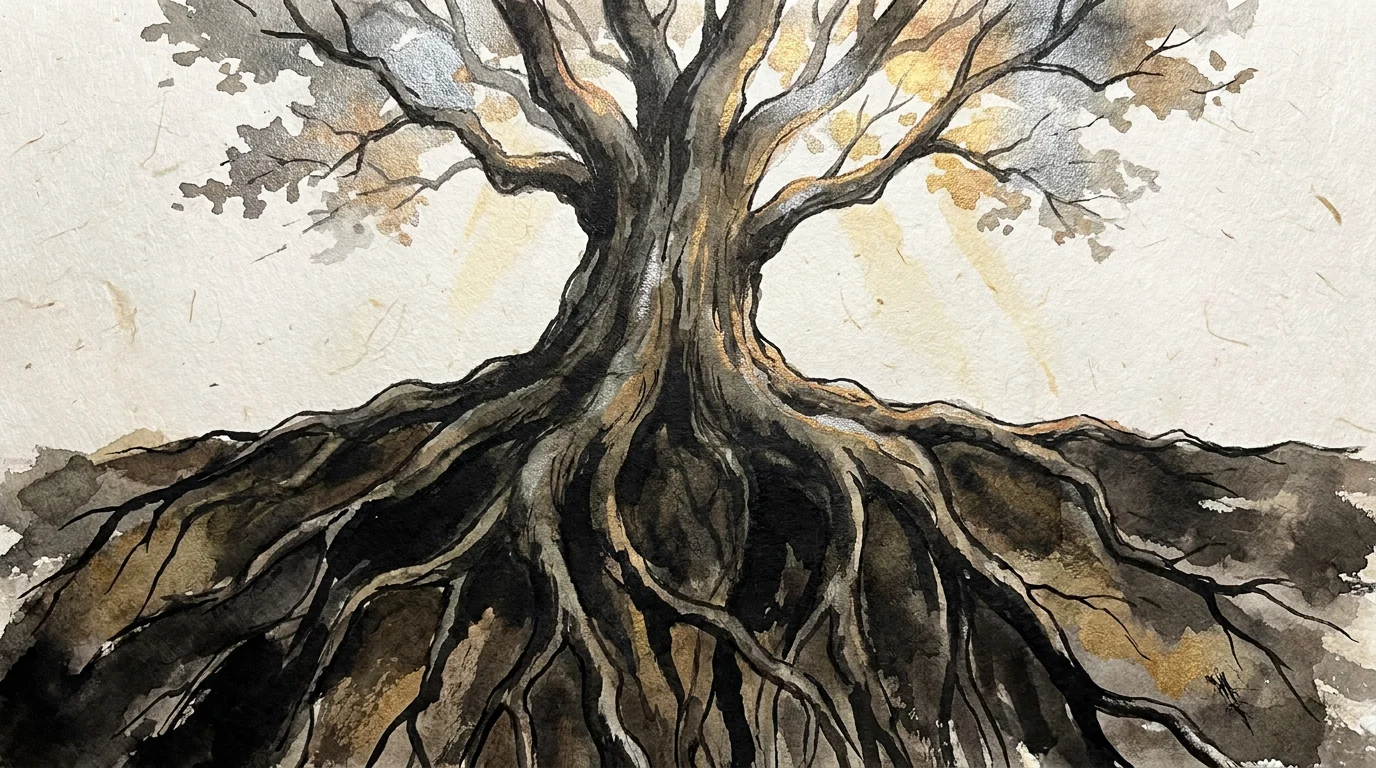
The Towering Tree: Essence of Jia Wood
In traditional BaZi theory, the Ten Heavenly Stems represent distinct archetypal energies. The first stem, Jia Wood (甲木), is universally likened to a massive, towering tree. The classic text Di Tian Sui (滴天髓) states, 'Jia Wood is towering, requires Fire to shed its earthly form' (甲木參天,脫胎要火). This imagery implies an energy that is fundamentally oriented toward upward growth, structured development, and the quest for light.
However, a tree does not exist in a vacuum. Its vitality is entirely dependent on its environment—the soil that anchors it, the water that nourishes it, the sun that warms it, and the elements that prune its branches. By viewing the BaZi chart as an ecological framework, we can better understand how individuals might interact with their circumstances.
Classical Wisdom: Di Tian Sui and Qiong Tong Bao Jian
The principles governing Jia Wood are deeply rooted in classical literature:
- Di Tian Sui (滴天髓): Emphasizes the innate strength and upward thrust of Yang Wood. It introduces the concept that strong Wood needs Fire to express its beauty and vitality, preventing it from becoming stagnant or overgrown.
- Qiong Tong Bao Jian (窮通寶鑑): This Qing Dynasty text focuses extensively on seasonal regulation. It notes that Jia Wood in the spring requires Fire to bloom, while Jia Wood in the autumn—when Metal is sharp—requires Fire to forge the Metal, thereby turning a destructive force into a refining tool.
These texts do not predict the future; rather, they offer a framework for observing how natural forces interact, which we can metaphorically apply to human endeavors.
Seasonal Dynamics: Spring Growth vs. Autumn Pruning
The month of birth provides the seasonal context for the Day Master, profoundly altering its structural landscape.
Spring Wood (Yin and Mao Months): During the spring, Wood is in its most vibrant phase. The energy is expansive. In this season, the primary structural need is often Fire (Bing or Ding). Fire allows the robust Wood energy to flow outward, symbolizing creativity, expression, and the blossoming of ideas. Excessive Metal during this tender growth phase can represent undue stress or restriction.
Autumn Wood (Shen and You Months): In autumn, Metal is the dominant seasonal force, symbolizing structure, discipline, and restriction. Jia Wood in autumn faces a harsher environment. The classic solution is the presence of Fire (especially Ding Fire) to control and forge the autumn Metal. When Metal is tempered by Fire, it acts as a skilled gardener's shears, refining the Wood into useful timber rather than destroying it.
Structural Case Study: Analyzing Two Synthetic Charts
| Feature | Chart A (Spring Yin Month) | Chart B (Autumn Shen Month) |
|---|---|---|
| Birth Data | 1991-02-13 11:30 | 1991-08-12 11:30 |
| Day Master | Jia Wood (甲) | Jia Wood (甲) |
| Month Branch | Yin (寅) - Spring Wood | Shen (申) - Autumn Metal |
| Key Dynamic | Supported by strong Yin roots. The Wu Fire in the hour allows the abundant Wood to blossom, while Geng Metal provides gentle structure. | The Shen month intensely challenges the Yin day root. The presence of Bing Fire in the month stem is crucial to temper the strong Metal. |
| Symbolic Focus | Unrestricted growth seeking avenues for creative expression. | Cultivating resilience and using strategic focus (Fire) to manage external pressures (Metal). |
To illustrate these seasonal differences, let us examine two synthetic charts generated for educational reflection. Both share the same Day Master and Hour, but their seasonal anchors (Month Branch) differ entirely.
In Chart A, the challenge is channeling abundant energy effectively. In Chart B, the challenge is maintaining inner stability amidst a highly structured or demanding environment.
A Framework for Self-Reflection
Understanding your BaZi structure is an exercise in self-awareness, not a deterministic sentence. If your chart mirrors the dynamics of Spring Wood, reflect on how you channel your abundant energy. Are you allowing yourself to 'blossom' through creative pursuits?
Conversely, if your chart aligns with the Autumn Wood archetype, consider your relationship with discipline and pressure. Are you using your inner fire (passion, intellect, strategy) to manage the demands placed upon you, turning stress into a tool for self-refinement? The BaZi framework encourages harmony with the cyclical nature of time.
Frequently Asked Questions
Q: Does a 'weak' Jia Wood mean I lack physical strength or resilience? No. In BaZi, 'strong' or 'weak' refers strictly to the elemental balance within the chart, not physical health or psychological fortitude. A 'weak' Wood simply means the structure relies more heavily on supportive elements like Water and Wood to maintain equilibrium.
Q: Is it always bad for Wood to encounter Metal? Absolutely not. While excessive Metal can symbolize pressure, balanced Metal—especially when tempered by Fire—represents discipline, leadership, and the ability to refine one's raw talents into masterful skills.
Q: How do the ten-year phases (Da Yun) affect this balance? The ten-year phases introduce shifting elemental environments. A phase bringing Fire to a cold chart, or Water to an overly dry chart, symbolizes a period where environmental conditions are structurally favorable for finding balance and expressing one's potential.
Inspect your deterministic Four Pillars
Enter a birth date and local time zone to view your Four Pillars and Dayun structure cleanly.
Open BaZi Calculator →