 YiInsight
YIINSIGHT / Method and reflection
I Ching Meaning: A Beginner’s Guide to the Book of Changes
Understand I Ching meaning, the Book of Changes, and the difference between classical text, translation, commentary, and your own reflection.
The short answer
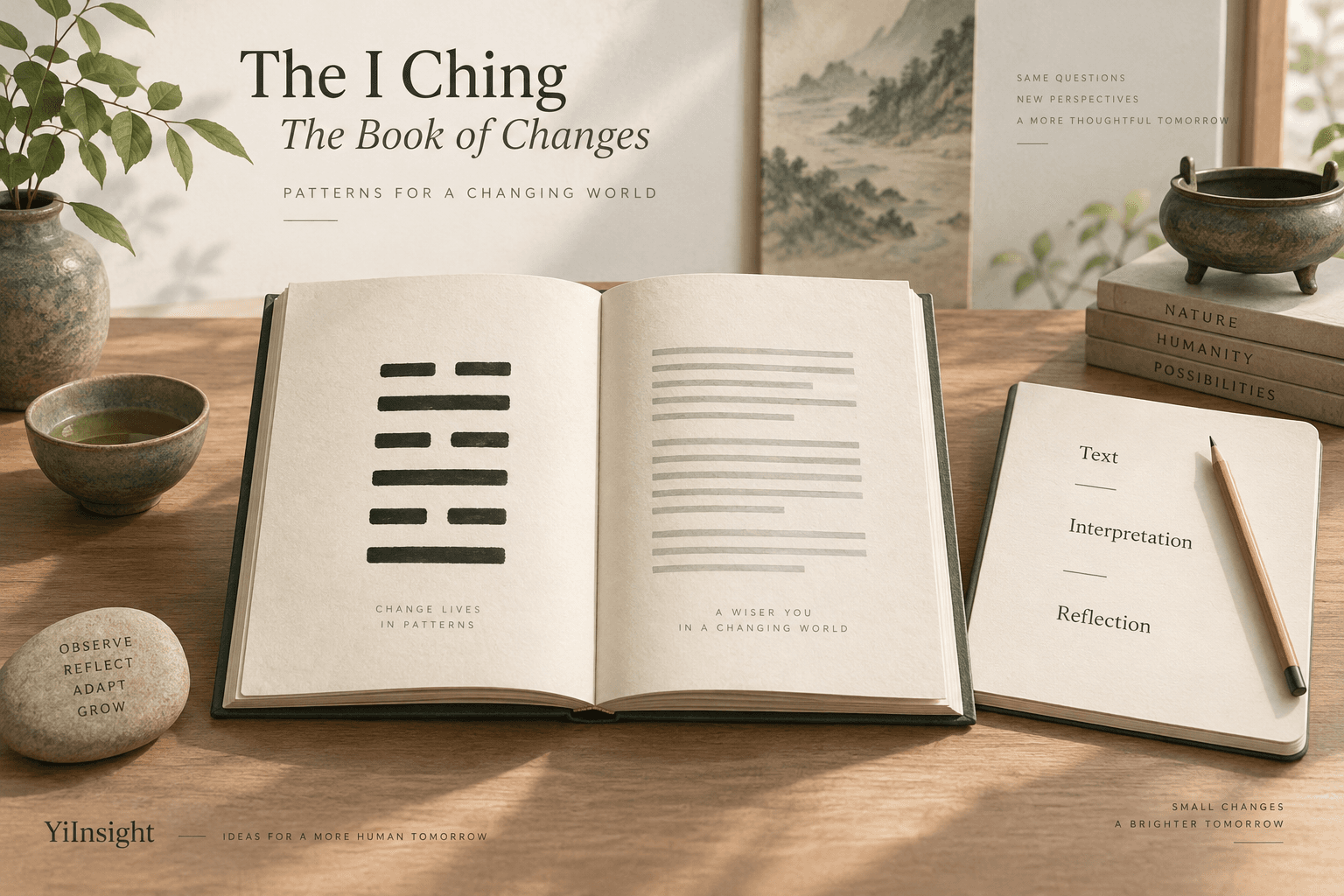
I Ching, also written Yijing, is commonly called the Book of Changes. It is a Chinese text with graphic figures, associated statements, and traditions of commentary. Understanding its meaning starts by distinguishing the text, a translation, an interpretation, and your own reflection.
Overview
The same search can lead you to an old text, a modern book, an online casting tool or an interpretation of a particular situation. It is easy to mistake one of those for the others. This guide gives a beginner a way to tell them apart and read with clear labels. You do not need to create a personal reading to use it, and it does not offer a prediction about your circumstances.
What the name refers to
I Ching is another spelling of Yijing, commonly called the Book of Changes in English. It names a Chinese text and the traditions of reading and interpreting it. An online reading is one encounter with that material; it is not the whole book. This distinction helps when a search result mixes a definition, a casting tool and a personal interpretation.
The Stanford Encyclopedia of Philosophy describes the work as layered: graphic figures, hexagram and line statements, and commentarial writings. It discusses both divination and philosophical interpretation. That is a useful orientation, not a reason to treat every modern explanation as an ancient quotation. When a page says “the I Ching means,” ask which layer it is explaining.
Keep four kinds of writing separate
A reading page may present classical text, a translation, a commentator's explanation and a contemporary reflection together. Give each a separate label in your notes. A translation makes choices about wording. Commentary explains how a reader understands the text. Your own reflection connects an idea with a situation you know. These are different activities even when they appear on the same screen.
Try a four-column notebook: passage or reference; translation used; explanation read; my response. Leave a column empty when you cannot identify its source. That empty space is more informative than silently treating an unattributed paragraph as the original. If you cannot tell where a sentence came from, record it as an unverified explanation rather than attaching a classical author's name to it.
Learn the figure before searching for a message
A beginner does not need to memorize every figure to read carefully. Start by making an accurate record of what the source page actually shows: the figure's reference number, its displayed name, and any marked line positions. Keep that record beside the passage you are reading, so that a later comparison still refers to the same material.
Use the hexagram structure guide when you need help distinguishing the drawing from its associated writing. Use the sources and editorial method to understand YiInsight's presentation choices. The point of these references is to make the reading inspectable. A beautiful diagram or a confident paragraph should not replace a clear source label.
A practical way to compare explanations
Suppose two introductions give different English names to the same numbered figure. Do not decide that one is wrong solely because the titles differ. First check whether both pages identify the same reference, then find the named translator or edition. Compare a short passage in context and mark which differences are in translation and which are later interpretation.
For your own notes, write three separate sentences: “The page identifies this reference”; “This explanation emphasizes this idea”; and “I connect it with this part of my situation.” The first records a source, the second summarizes a reading, and the third belongs to you. This small exercise prevents your response from becoming an invented quotation. It also gives you something concrete to revise if you discover a better source.
Choose a next step that matches your question
If you want the meaning of the name, an introductory definition may be enough. If you want to understand a passage, choose a sourced edition and read its surrounding explanation. If you want to reflect on a decision, describe what you actually know before interpreting any symbolic language. For instance, “I have two options and need to compare their demands” gives you a clearer task than “Tell me what must happen.”
These are reading suggestions, not instructions from the classical text and not evidence that a reading predicts an outcome. Keep observable facts, uncertainties and your responsibilities visible. A question about someone else's private thoughts is not answered by a confident interpretation. You can instead note what you have observed and decide what conversation or information would help.
Key takeaways
- The I Ching is commonly called the Book of Changes.
- Classical text, translation, commentary and reflection need separate labels.
- Record a reference before comparing different explanations.
Conclusion
Begin with the name of the work, identify the kind of writing in front of you, and keep its source separate from your response. A useful first reading leaves you with clearer references and better questions. You can return to those notes without turning an interpretation into a statement of fact about what will happen.
Are I Ching and Yijing different books?
They are different spellings used for the work commonly called the Book of Changes. Check the edition and translation when comparing particular passages.
Is a modern interpretation the original text?
Do not assume so. Look for separate source, translation and commentary labels. Treat an unattributed explanation as an explanation until its source is established.
Do I need to make a personal cast to learn the meaning?
No. You can begin with a definition, examine a sourced passage, and practice distinguishing text from interpretation without creating a personal reading.
Sources
Reflect on one question
Frame a focused question before starting a new reading.
Explore YiInsight →