Hexagram structure
Reading a 10-Year Dayun Pillar: How Heavenly Stems and Earthly Branches Shift Momentum
Discover the classical BaZi approach to decoding your 10-year Dayun (Luck Pillar). Learn how Heavenly Stems and Earthly Branches reflect different phases of personal evolution.
The short answer
In classical BaZi, a 10-year Dayun pillar is evaluated as an integrated unit. The Heavenly Stem represents visible, outward shifts in your environment or career, often feeling more prominent early on. The Earthly Branch forms the underlying foundation and persistent reality that anchors the entire decade.
Introduction to the Dayun (10-Year Pillar)
In the study of classical BaZi, the natal chart represents the baseline architecture of a person's life, while the Dayun (大運)—often translated as the '10-Year Luck Pillar'—represents the shifting climatic environment that this architecture encounters over time. Despite the common translation of 'luck,' Dayun has nothing to do with random fortune. Instead, it refers to a distinct period of momentum, a ten-year seasonal shift that brings new elemental themes to the forefront.
Each Dayun is composed of two characters: a Heavenly Stem (天干) on top, and an Earthly Branch (地支) on the bottom. A frequent question arises: within a single decade, do these two characters exert their influence equally? The classical texts, such as the Zi Ping Zhen Quan (子平真詮) and San Ming Tong Hui (三命通會), provide nuanced guidelines on how to read this dynamic interplay.
The Core Concept: Surface vs. Foundation
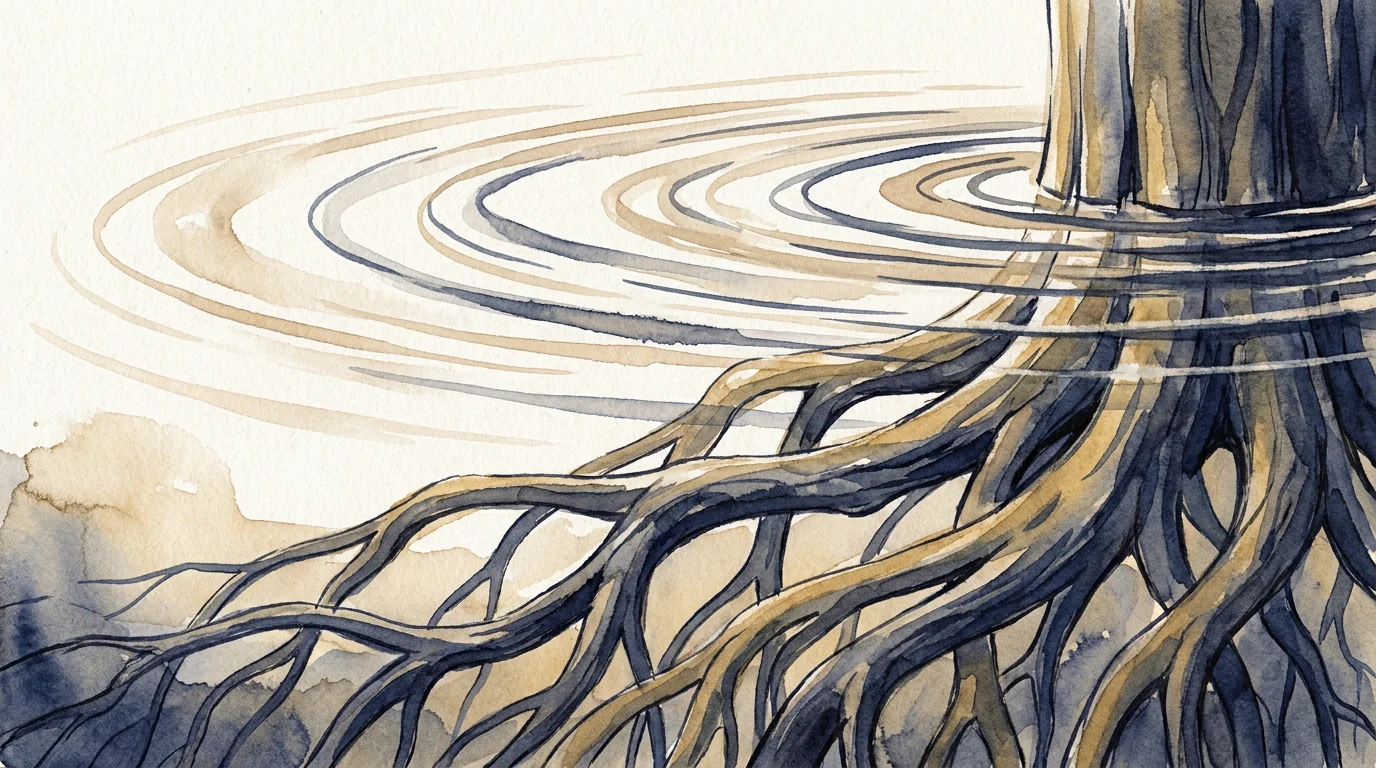
To understand the weight of the Heavenly Stem versus the Earthly Branch in a Dayun, it is helpful to use the metaphor of a tree.
- The Heavenly Stem (Surface/Manifestation): The stem represents what is visible above ground. It correlates with clear, outward changes in a person's life—such as shifting social roles, new environments, apparent career moves, or prominent intellectual interests. It is the 'phenomenon' that others can readily observe.
- The Earthly Branch (Foundation/Reality): The branch represents the roots below ground. It correlates with internal shifts, deeply ingrained structural changes, and the fundamental reality of the period. Even if the stem promises outward growth, if the branch does not support it, that growth may lack staying power.
In classical theory, the Heavenly Stem's energy is often considered more acute or immediately noticeable, whereas the Earthly Branch acts as a heavier, slower-moving baseline that dictates the ultimate capacity of that decade.
The 'Five-Year Split' Debate in Classical Thought
A popular heuristic in evaluating Dayun is the 'Five-Year Split'—the idea that the Heavenly Stem rules the first five years of the decade, and the Earthly Branch rules the latter five years. While this offers a convenient conceptual timeline, classical scholars often advocate for a more integrated, holistic view.
The Zi Ping Zhen Quan emphasizes that a pillar is a single entity. The stem and branch interact with each other. If the stem is 'strong' (meaning it shares the same elemental nature as the branch, or is nurtured by it), its visible effects are grounded and persistent. If the stem is 'weak' (clashing with or unsupported by its branch), its initial prominence may quickly give way to the branch's underlying reality.
Therefore, instead of a strict 50/50 temporal split, consider the stem as the initial theme that introduces the decade, which gradually reveals its true nature through the foundational reality of the branch as the years progress.
Applying the Concept: Synthetic Chart Analysis
| Feature | Synthetic Chart A | Synthetic Chart B |
|---|---|---|
| Day Master | Geng (Yang Metal) | Geng (Yang Metal) |
| Year Pillar | Geng Wu (Metal/Fire) | Geng Wu (Metal/Fire) |
| Month Pillar | Bing Xu (Fire/Earth) | Bing Xu (Fire/Earth) |
| Day Pillar | Geng Xu (Metal/Earth) | Geng Xu (Metal/Earth) |
| Hour Pillar | Xin Si (Metal/Fire) | Jia Shen (Wood/Metal) |
To illustrate this, let us observe how the same Dayun pillar might interact with two different synthetic baseline structures.
Both charts feature a Geng (Yang Metal) Day Master born in the Earth month of Xu.
Chart A has a strong presence of Fire (Wu, Bing, Si) tempering the Metal. If this chart were to enter a Dayun of Ren Zi (Water Stem / Water Branch), the Ren Water (Heavenly Stem) would immediately introduce a visible theme of expression or shifting social dynamics (Clashing with Bing Fire). Because Ren is powerfully rooted in the Zi Water branch, this outward shift is deeply supported by foundational changes throughout the entire decade.
Chart B has an hour pillar of Jia Shen, rooting the Geng Metal strongly in the Shen branch and introducing Jia Wood. If this chart were to enter a Dayun of Ren Wu (Water Stem / Fire Branch), the Ren Water stem introduces the same initial theme of expression. However, the Wu Fire branch does not support Water; instead, it strengthens the foundational Fire of the natal chart. The individual might experience a visible desire for outward expression early in the decade, but the underlying, long-term reality of those ten years will be defined by discipline, pressure, or institutional transformation (Fire themes).
Common Misconceptions
- Strict 5-Year Cutoff: Believing that at precisely the five-year mark, the stem's theme vanishes and the branch takes over completely. In reality, the branch's influence is present from day one, acting as the landscape upon which the stem operates.
- Evaluating the Stem in Isolation: Assessing the Heavenly Stem without looking at its Earthly Branch. A Wood stem sitting on a Water branch behaves very differently from a Wood stem sitting on a Metal branch.
- Deterministic Fortune: Viewing 'good' stems as guaranteed success and 'bad' branches as guaranteed failure. Dayun reflects shifting environmental conditions. Recognizing these shifts allows for mindful adaptation, not passive resignation.
Frequently Asked Questions (FAQ)
Q: Does the Earthly Branch of the Dayun interact with the natal chart? A: Yes. In classical BaZi, the Earthly Branch of the Dayun actively interacts with the branches of the natal chart through structural relationships such as combinations, clashes, or harmonies. These interactions form the deepest foundational shifts of the decade.
Q: How should I prepare for a new Dayun? A: By observing both characters. Note the Heavenly Stem as the likely area where new opportunities or visible changes will first manifest. Simultaneously, look to the Earthly Branch to understand the deeper structural reality and prepare your mindset for long-term foundational development.
Inspect your deterministic Four Pillars
Enter a birth date and local time zone to view your Four Pillars and Dayun structure cleanly.
Open BaZi Calculator →