 YiInsight
YIINSIGHT / Canonical hexagram
Hexagram 52: Stillness, Boundaries, and Knowing When to Stop
Understand hexagram 52: Stillness appropriate to the moment. Read the Judgment, six line settings, structural image, and a clearly labeled modern example.
Hexagram 52: 艮 · gèn
Mountain below Mountain. Lines are numbered from the bottom upward.
The short answer
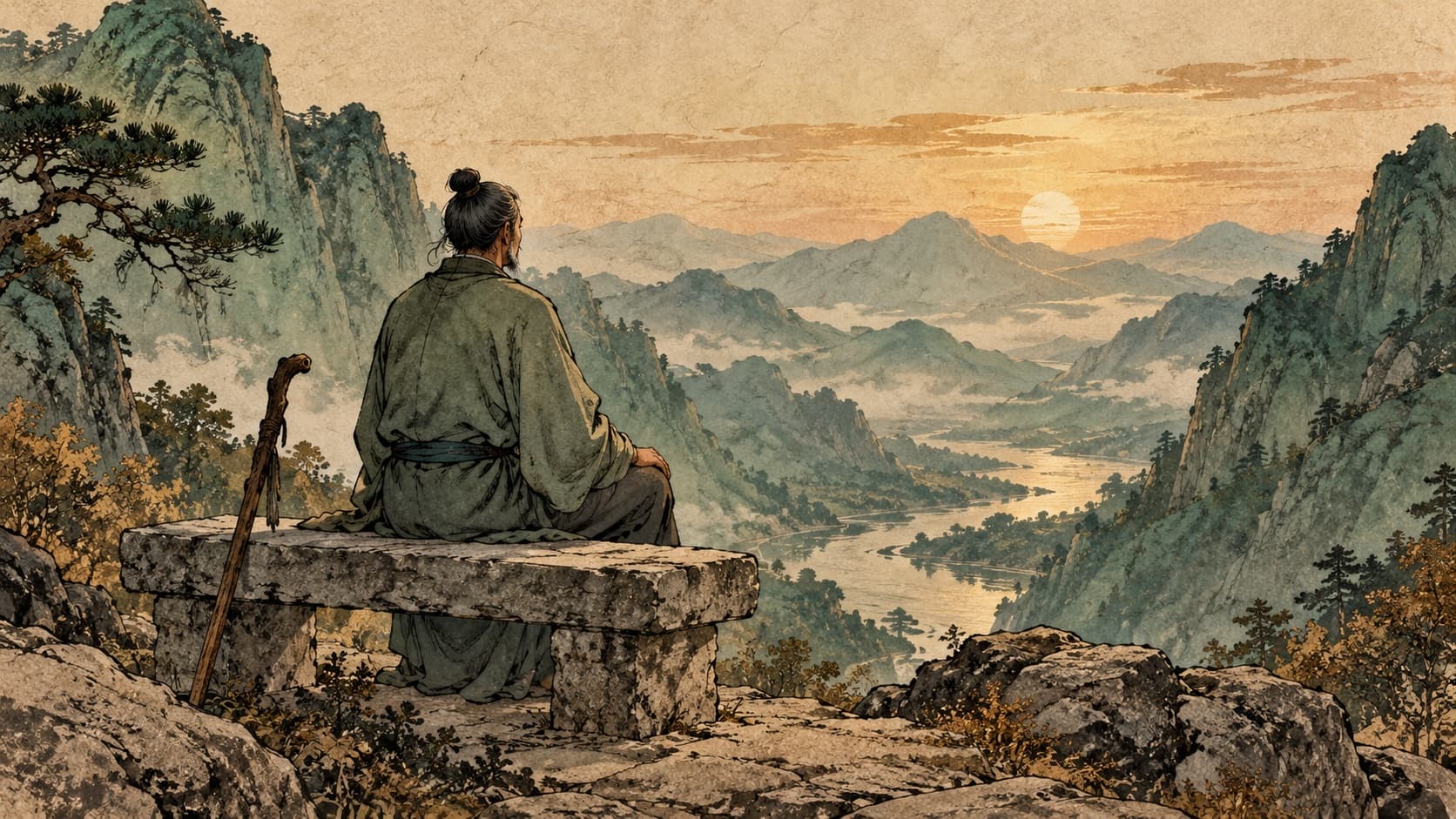
Hexagram 52, Gen, is repeated mountain. Its Judgment presents stillness through bodily and courtyard imagery; the Commentary distinguishes stopping when it is time to stop from moving when it is time to move. The lines explore different forms and degrees of restraint.
Overview
Hexagram 52 becomes easier to read when its different textual layers remain visible. Start with the broad situation described by the Judgment. Then identify the particular position named in your recorded cast. The Image commentary offers another perspective, and a modern example can help you test an interpretation against ordinary experience. This guide uses that sequence to explore stillness appropriate to the moment. Read the chapter as a set of distinctions: what is happening, where you stand, which action fits that position, and what observable result would make you revise your interpretation.
The Judgment: Stillness appropriate to the moment
The fixed Chinese digital transcription distinguishes the Judgment, Commentary on the Judgment, Great Image, and line statements.
The Judgment speaks of stilling the back, not apprehending the body, and walking in a courtyard without seeing its people. These compact images have a long interpretive history. This guide offers orientation to their setting rather than claiming a single certified translation of every phrase.
The Commentary provides a particularly useful distinction: stop when stopping is timely, and move when movement is timely. Stillness is therefore not identical with permanent withdrawal. Its value depends on whether it fits the situation. A pause can make attention more precise; an indefinite refusal to respond can simply leave a task undone.
Read the bodily line images as particular positions within this theme. The chapter moves through toes, calves, the middle of the body, the torso, and the area of speech before its concluding stillness. These are literary images for reading in context, not a medical explanation or a prescribed physical exercise.
Read the structural image in context
In the pinned Chinese chapter, hexagram 52 is 52-gen, with Mountain below and Mountain above. Count positions from bottom to top; 1 means a solid line and 0 a broken line. Its stored pattern is 001001. That identifies the figure, not a personal outcome.
Mountain is repeated above and below. The Great Image connects that boundary with thought that does not go beyond its proper place. One practical interpretation is to distinguish the decision actually before you from every imagined consequence around it.
For example, deciding what to say in a meeting differs from trying to control every reaction to it. A useful boundary narrows the task without denying relevant evidence. Ask what belongs to your responsibility, what information is available, and what needs another person's participation. Stillness can then support an appropriate next movement.
Six line settings: read the particular position
The following are original modern English orientation notes on the six statements in the linked Chinese transcription. They are not a certified translation or six future events in sequence:
- Line 1: The first line stills the toes and values lasting correctness. Notice an impulse before it has become a larger action.
- Line 2: The second line stills the calves but cannot rescue what it follows. Restraint can feel frustrating when a larger movement remains outside your control.
- Line 3: The third line depicts painful, rigid stopping around the middle of the body. Do not confuse forced immobility with composed attention.
- Line 4: The fourth line stills the body and finds no blame. Attend to the conduct that is actually yours to regulate.
- Line 5: The fifth line concerns the jaws and ordered or trustworthy speech in textual variants. Pause long enough to make speech coherent and relevant.
- Line 6: The final line describes substantial stillness favorably. Read it as a quality of settled restraint, not a promise that silence always resolves conflict.
For a cast with a changing line, use the changing-lines guide and read that precise position in context.
A fictional modern example
A team member receives a tense email just before a review meeting. His first draft of a reply answers every criticism and adds several unrelated grievances. He puts the draft aside for ten minutes and lists the two factual questions that the meeting actually needs to resolve.
At the meeting he asks those questions and listens to the answers. He then sends a shorter follow-up that records the agreed responsibility and deadline. The pause mattered because it changed the scope and clarity of his response, not because it removed the disagreement.
This invented example illustrates a boundary between an immediate impulse and a considered action. It does not recommend silence when a response is necessary. The right length and purpose of a pause depend on the real situation.
Questions for a practical modern reflection
These prompts are modern editorial reflection, separate from the quoted classical text and its historical commentary:
- What is the exact task that needs your attention now?
- Which impulse could benefit from a pause before it becomes action?
- What evidence would show that it is time to move again?
Choose one small action you can assess with ordinary evidence. Record what happened without treating a favorable symbol as proof that the action will work. If your observation contradicts your first interpretation, preserve the observation rather than forcing it into the text.
Use this chapter without changing the cast
Start with the question as it was actually asked. Identify the recorded primary hexagram, then any actual changing positions and relating figure. This explanatory article does not cast, choose a line, or infer a new figure. Keep the original cast separate from the interpretation you are exploring.
Read the Judgment for its broad setting, the relevant line for its particular context, and the Image as a distinct commentary layer. The reading guide provides a learning path. The English notes and fictional example here are original editorial material based on a public digital transcription. They do not certify an ancient edition or use unreviewed Gao Heng annotations.
Key takeaways
- Stillness appropriate to the moment is the chapter-level theme, not a guaranteed outcome.
- Read the actual changing position rather than combining all six into a prediction.
- Keep classical text, commentary, and the fictional modern example distinct.
Conclusion
Return to the actual question and the precise line, if any, before drawing a conclusion from hexagram 52. Its central concern here is stillness appropriate to the moment. Choose a modest interpretation that you can explain in plain language, identify one observable next step, and keep a record of what happened. The text supplies a lens; the outcome still needs to be observed.
What does hexagram 52 mean?
Hexagram 52, Gen, is repeated mountain. Its Judgment presents stillness through bodily and courtyard imagery; the Commentary distinguishes stopping when it is time to stop from moving when it is time to move. The lines explore different forms and degrees of restraint.
Do all six lines of hexagram 52 apply to my reading?
The six positions show different settings. Begin with the line or lines actually recorded as changing in your cast. When none change, read the primary figure and the chosen method consistently; do not invent a changing line to obtain a preferred answer.
How should I use the modern example?
Use it to understand a distinction in the chapter. It is an invented teaching example, not a documented reading outcome or a prediction about your situation. Replace its details with facts you can actually observe.
Sources
Reflect on one question
Frame a focused question before starting a new reading.
Explore YiInsight →