 YiInsight
YIINSIGHT / Canonical hexagram
Hexagram 48: The Well, Shared Resources, and Usable Support
Read Hexagram 48, Jing or The Well, through its shared resource image, six changing-line settings, maintenance, and the difference between potential and access.
Hexagram 48: 井 · jǐng
Wind below Water. Lines are numbered from the bottom upward.
The short answer
Hexagram 48, Jing or The Well, asks how a sustaining resource becomes genuinely usable. The well may remain while a settlement changes, yet mud, a damaged vessel, poor access, or unfinished work can prevent nourishment. Its central distinction is between possessing a resource and making it available in a sound way.
Overview
People can value a resource while neglecting the means of reaching it. A library without usable opening hours or a tool without maintenance may exist without serving its purpose. These are modern analogies, not classical examples. Jing provides a way to examine capacity, care, access, and completion without promising that every neglected resource will eventually be recognized.
The well remains, but the final delivery can still fail
The pinned Chinese digital transcription separates the Judgment, Commentary on the Judgment, Great Image and six line statements. The English orientation below is original editorial interpretation, not a certified translation.
The Judgment contrasts a changing settlement with an unchanging well and describes people coming and going. It also warns about nearly reaching the water and damaging the vessel. The Commentary distinguishes the presence of water from the accomplishment of drawing it up. A favorable resource is not the same thing as a finished useful action.
A modern reflection can therefore inspect the whole chain: the source, the method of access, the container, and the people meant to benefit. Do not let an impressive beginning hide a fragile final step. This is a practical analogy, not evidence that an actual well, financial asset, or personal ability is safe. Physical water quality and other technical matters require the appropriate real-world checks.
Water above Wood: nourishment includes organization
The figure in the pinned Chinese chapter has Wind below and Water above. Its bottom-to-top pattern is 011010, with 1 for a solid line and 0 for a broken line. This identifies hexagram 48, 48-jing, not a personal cast or outcome.
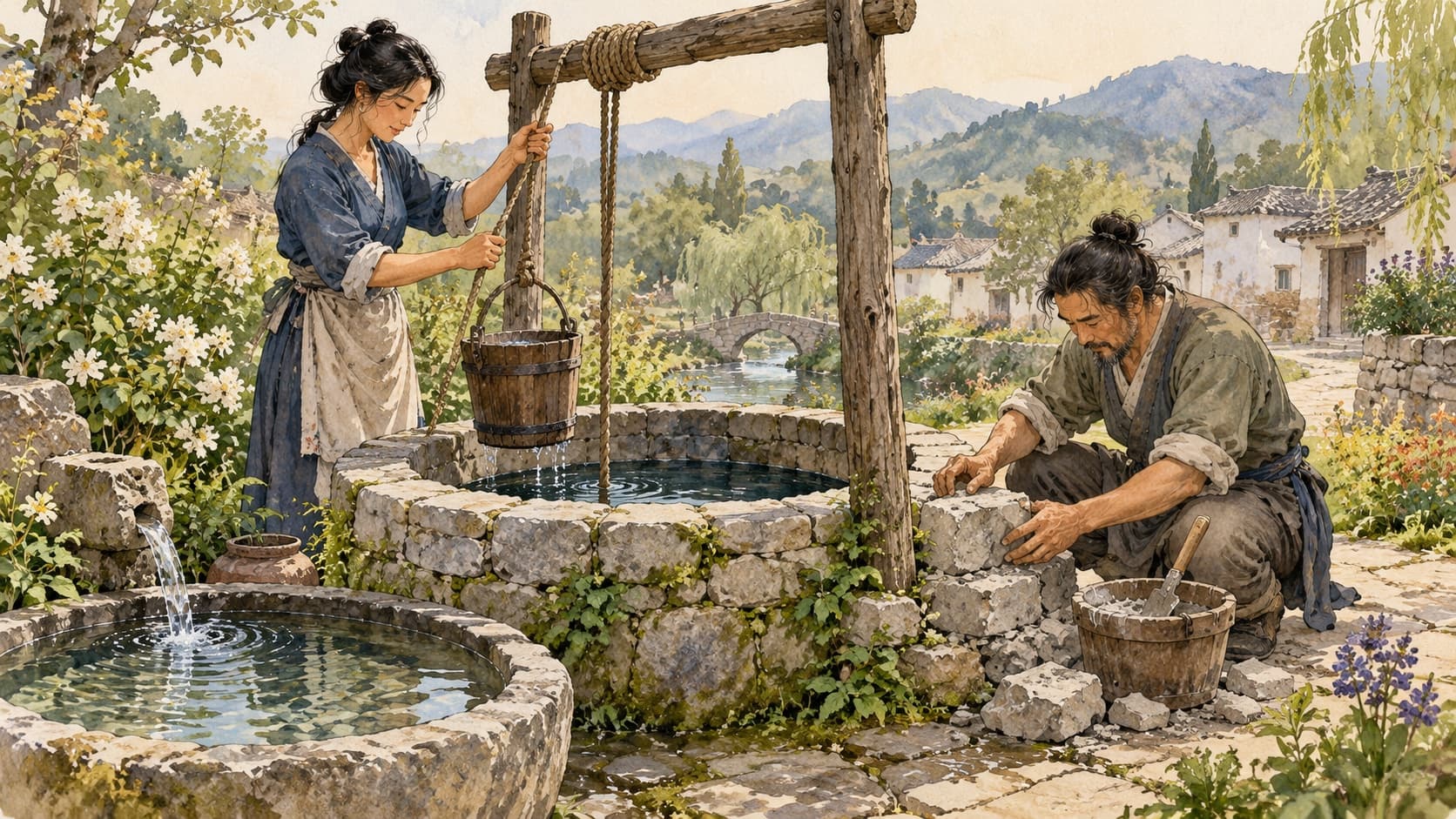
The Great Image describes water above wood and connects the figure with encouraging people's work and mutual assistance. The illustration depicts adults maintaining a communal well as a fictional teaching scene. It does not document an ancient water system or certify a modern one. Its focus is the shared work needed to make a resource accessible rather than a solitary claim of ownership.
Six line settings: read the particular position
The following original English orientation notes refer to the six distinct statements in the linked Chinese transcription. They are not six predicted events in sequence.
- Line 1: The first describes muddy water that is not consumed and an old well no longer visited by birds. Mere existence does not establish usefulness.
- Line 2: The second presents a well hollow with small fish and a damaged leaking vessel. The means of collection can be as important as the source.
- Line 3: The third describes a cleaned well whose water is not consumed, alongside sorrow and a wish for wise recognition. Readiness and actual use remain distinct.
- Line 4: The fourth describes lining or repairing the well and names no blame. Necessary maintenance need not be mistaken for a failure to produce immediately.
- Line 5: The fifth presents clear cold water that can be consumed. This is the chapter's image of usable nourishment, not a water-safety certificate.
- Line 6: The upper line concerns drawing from the well without covering it, with trust and favorable language. Open availability still requires sensible real-world stewardship.
Use the changing-lines guide for the position actually recorded in a cast, rather than selecting a more encouraging statement.
A fictional example: finish the route from resource to use
A neighborhood group owns useful equipment, but the booking instructions are outdated and a needed component is missing. Announcing the equipment again will not solve either problem. A Jing-inspired reflection could identify the missing component, assign maintenance responsibility, and test the booking instructions with a newcomer. The result remains uncertain until those steps work. This example emphasizes the delivery path, not a claim that sharing always removes conflict or that every resource should be made unrestricted.
Questions for a grounded modern reflection
These prompts are modern editorial reflection, separate from the classical wording and its historical commentary:
- Is the resource usable, or merely present?
- Which part of access, maintenance, or delivery is failing?
- Who is currently unable to benefit, and what evidence explains that?
Trace a resource from its source to its intended user. Identify where that path currently breaks: condition, maintenance, access, instructions, or delivery. Choose one observable repair and check it with the people affected. Do not infer that good intentions make the resource usable. Keep technical safety questions separate from the metaphor, and obtain the relevant checks before anyone relies on the resource.
Use the chapter without changing the cast
Start with the question and the cast as actually recorded. Identify the primary figure, any changing positions, and the relating figure without recasting to improve the answer. The reading guide explains this distinction. This educational article does not choose, infer, alter, or reroll a cast.
Read the Judgment for the broad setting and the actual line for its particular circumstances. The Great Image and Commentary are distinct source layers. The modern examples and illustration here are fictional teaching material, not observed outcomes or classical quotations. The cited source is a public digital transcription; this article does not certify an ancient edition or attribute unreviewed Gao Heng annotations.
Key takeaways
- A resource's existence does not guarantee access or usefulness.
- Maintenance and the final delivery step belong to the same task.
- Shared nourishment is an interpretive theme, not a technical safety claim.
Conclusion
The Well connects lasting support with the work that makes it usable. Attend to the recorded position, distinguish potential from delivery, and verify the actual condition of a resource before relying on it.
Does Hexagram 48 guarantee that my talents will be recognized?
No. The third line distinguishes readiness from actual use. It does not supply evidence that recognition will arrive or tell you when it will happen.
Is repairing the well a negative sign?
The fourth line presents repair with no-blame language. Whether maintenance is appropriate in a real situation still depends on the condition and responsibilities involved.
Does this hexagram tell me that water is safe to drink?
No. The text's clear-water image is not a physical assessment. Follow relevant water-quality guidance and testing for a real source.
Sources
Reflect on one question
Frame a focused question before starting a new reading.
Explore YiInsight →