 YiInsight
YIINSIGHT / Canonical hexagram
Hexagram 39: Obstruction, Returning, and Finding Support
Explore Hexagram 39, Jian: water above mountain, the recurring advance-and-return lines, and practical reflection when a route is blocked.
Hexagram 39: 蹇 · jiǎn
Mountain below Water. Lines are numbered from the bottom upward.
The short answer
Hexagram 39, Jian or Obstruction, presents difficulty ahead and repeatedly contrasts going forward with returning. Its Judgment includes seeking a capable person, while several lines introduce connection and help. It does not mean every obstacle is permanent or that withdrawal is always the right answer.
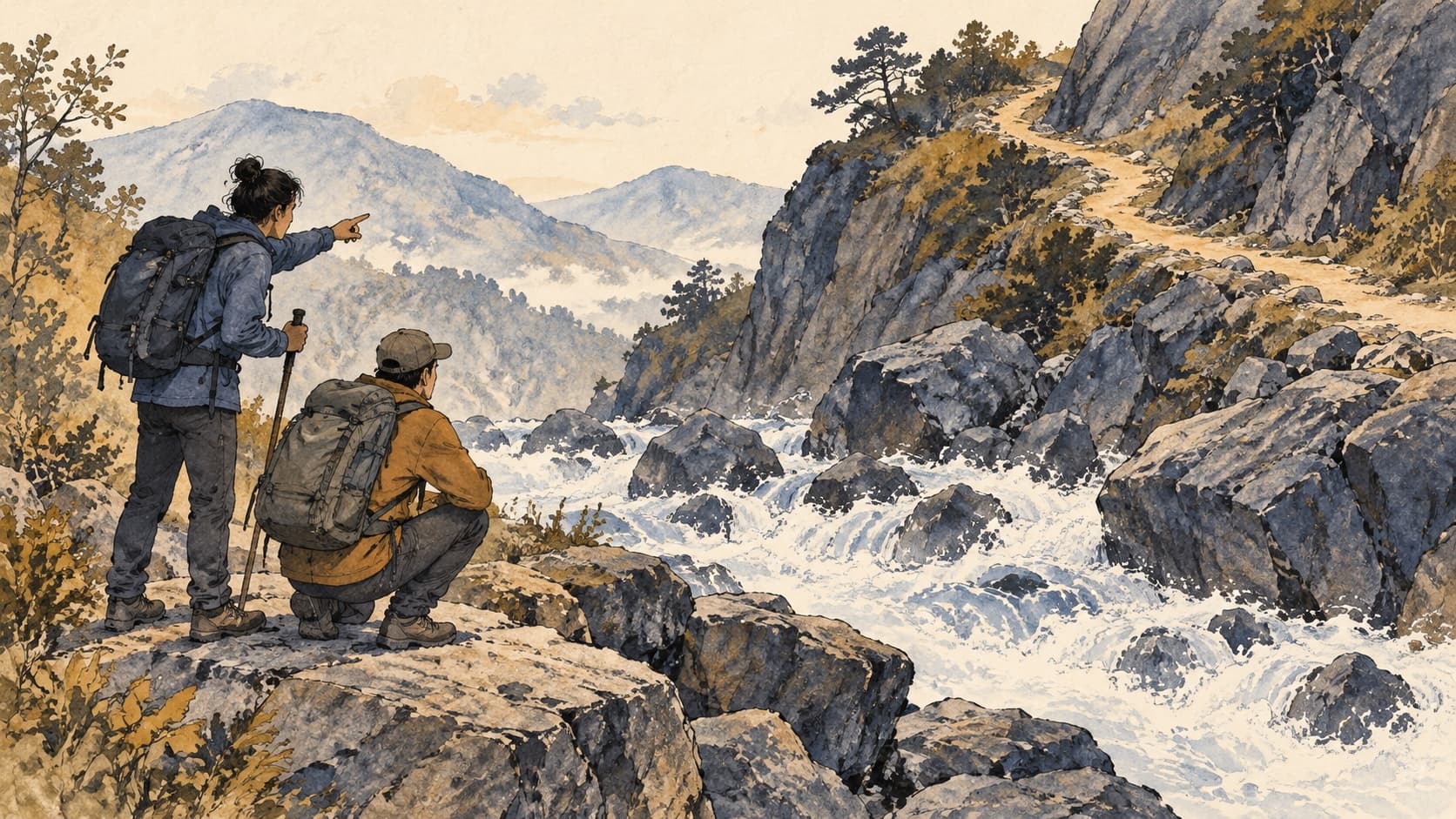
Overview
An obstacle can be real without requiring you to force the same route. Jian helps frame the difference between abandoning a purpose and reconsidering the means of reaching it. Read the relevant line carefully: returning, joining others, and serving through difficulty are distinct settings within the chapter.
The Judgment: direction and capable assistance
The fixed Chinese digital transcription distinguishes the Judgment, Commentary on the Judgment, Great Image, and line statements.
The Judgment favors the southwest rather than the northeast and speaks of seeing a great person and constancy. The Commentary describes danger ahead and the wisdom of recognizing it and stopping. These are features of this text, not a general navigation rule for your location.
A modern application might be to seek someone with relevant experience before continuing an obstructed task. The hexagram cannot identify that person for you. Assess their actual knowledge, their role, and the evidence behind their advice. Likewise, a symbolic compass direction should not replace an assessment of real terrain, travel conditions, or safety.
Water above mountain: examine your own part
In the pinned Chinese chapter, hexagram 39 is 39-jian, with Mountain below and Water above. Count positions from bottom to top; 1 means a solid line and 0 a broken line. Its stored pattern is 001010. That identifies the figure, not a personal outcome.
The Great Image gives water on the mountain and turns attention toward examining oneself and cultivating conduct. This need not mean blaming yourself for an external problem. It invites a narrower question: what part of the response is within your control? You may be unable to remove the obstacle, yet able to change a method, ask for assistance, or stop adding avoidable difficulty.
Six line settings: read the particular position
The following are original modern English orientation notes on the six statements in the linked Chinese transcription. They are not a certified translation or six future events in sequence:
- Line 1: Going brings obstruction and returning brings praise. The Image associates this position with waiting rather than pressing onward immediately.
- Line 2: The king's servant encounters repeated difficulty for a reason beyond personal self-interest. Duty here differs from simply pursuing one's own preferred result.
- Line 3: Going brings obstruction and returning is emphasized. The Image mentions those within being glad; returning can preserve an existing connection.
- Line 4: Going brings obstruction and returning brings joining. This position introduces connection rather than merely depicting solitary retreat.
- Line 5: In great obstruction, friends come. That textual image is not a guarantee that specific people will arrive or solve a modern problem.
- Line 6: Going brings obstruction and returning brings something greater, with a favorable judgment and reference to seeing a great person. Assistance remains part of the setting.
For a cast with a changing line, use the changing-lines guide and read that precise position in context.
A fictional example: changing the route of a research project
A fictional student cannot obtain the archive access required for her original project design. After several unsuccessful requests, she is tempted to repeat the same request with a stronger letter. Instead, she asks an adviser which part of the research question can be answered with accessible sources.
They identify a smaller, documented comparison and preserve the original question for later work. This is a change in route, not proof that the first goal was foolish. The example illustrates returning to available support. Whether the revised project is adequate depends on its sources and requirements, not on assigning a favorable meaning to the obstacle.
Questions for a practical modern reflection
These prompts are modern editorial reflection, separate from the quoted classical text and its historical commentary:
- What is the actual obstacle, rather than my explanation of it?
- Who has relevant knowledge and a legitimate role in helping?
- Can I change the route while preserving the purpose?
Choose one small action you can assess with ordinary evidence. Record what happened without treating a favorable symbol as proof that the action will work. If your observation contradicts your first interpretation, preserve the observation rather than forcing it into the text.
Use this chapter without changing the cast
Start with the question as it was actually asked. Identify the recorded primary hexagram, then any actual changing positions and relating figure. This explanatory article does not cast, choose a line, or infer a new figure. Keep the original cast separate from the interpretation you are exploring.
Read the Judgment for its broad setting, the relevant line for its particular context, and the Image as a distinct commentary layer. The reading guide provides a learning path. The English notes and fictional example here are original editorial material based on a public digital transcription. They do not certify an ancient edition or use unreviewed Gao Heng annotations.
Key takeaways
- Returning can change a route without abandoning its purpose.
- Support must be evaluated through real knowledge and conduct.
- The compass language is not personal navigation advice.
Conclusion
Jian invites a thoughtful response to difficulty. Recognize the obstacle, examine your own contribution, and consider return or connection without declaring the entire purpose impossible.
Does Hexagram 39 mean I should give up?
Not necessarily. Several positions involve returning or finding connection. Consider the particular obstacle and the actual line before deciding.
Who is the great person in my reading?
The text cannot identify a specific individual. Look for relevant competence and a suitable role rather than assigning authority through symbolism alone.
Should I travel southwest because of the Judgment?
Do not treat its directional language as practical travel guidance. Actual routes require current, situation-specific information.
Sources
Reflect on one question
Frame a focused question before starting a new reading.
Explore YiInsight →