 YiInsight
YIINSIGHT / Canonical hexagram
Hexagram 32: Duration Without Repeating an Unhelpful Habit
Understand Hexagram 32, Heng: enduring direction, thunder and wind, the six line settings, and how persistence differs from repetition.
Hexagram 32: 恆 · héng
Wind below Thunder. Lines are numbered from the bottom upward.
The short answer
Hexagram 32, Heng or Duration, concerns what can endure through time. Its Commentary links duration with continuing movement and changing seasons, while the lines question several unsuccessful forms of constancy. It does not mean that every existing relationship, method, or commitment must remain unchanged.
Overview
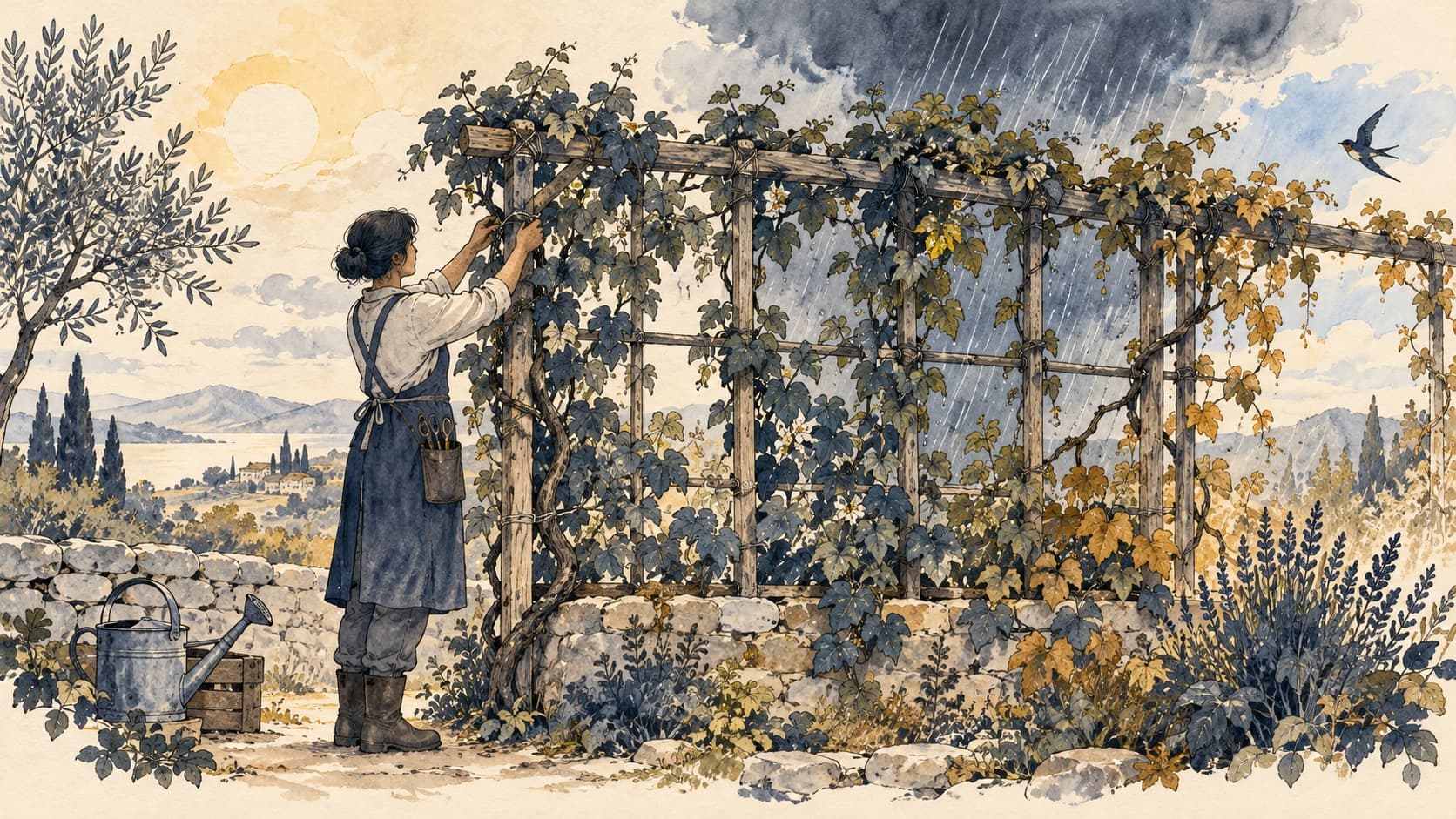
Persistence is easy to praise in the abstract. The harder question is what deserves to continue and how its form can adapt without losing its direction. Heng is especially useful when you can distinguish a lasting purpose from a routine that no longer serves it. The actual line supplies a more precise setting.
The Judgment: continuity can include movement
The fixed Chinese digital transcription distinguishes the Judgment, Commentary on the Judgment, Great Image, and line statements.
The Judgment combines favorable passage, constancy, and having somewhere to go. The Commentary describes duration through an enduring way, the recurring movement of sun and moon, and the changing seasons. Continuity therefore need not mean complete immobility.
For a modern reflection, separate the purpose you want to preserve from the arrangement currently serving it. Supporting a shared project may require changing the meeting format rather than insisting on the same meeting forever. That is an application of the theme, not a guarantee that a particular change will succeed or a claim about another person's commitment.
Thunder and wind: hold a direction, assess the method
In the pinned Chinese chapter, hexagram 32 is 32-heng, with Wind below and Thunder above. Count positions from bottom to top; 1 means a solid line and 0 a broken line. Its stored pattern is 011100. That identifies the figure, not a personal outcome.
The Great Image pairs thunder and wind and describes standing without changing one's direction. Read this alongside the moving, cyclical imagery of the Commentary rather than isolating it as a slogan against change. A stable direction can be expressed through responsive actions. An ordinary test is whether repeated behavior still produces the support or understanding it was intended to provide.
Six line settings: read the particular position
The following are original modern English orientation notes on the six statements in the linked Chinese transcription. They are not a certified translation or six future events in sequence:
- Line 1: Seeking depth of duration at the beginning receives an unfavorable judgment. The Image associates the problem with demanding depth from the start.
- Line 2: The second line simply says regret disappears. The Image connects it with lasting in the middle; do not invent an elaborate event that the statement does not contain.
- Line 3: A lack of constancy in one's virtue brings shame and difficulty. The focus is conduct rather than a promise about how others will behave.
- Line 4: Hunting without game illustrates persistence in an unproductive setting. The Image asks what can be obtained by remaining in an unsuitable position.
- Line 5: The fifth uses different judgments for a woman and a man in its historical role language. These notes do not endorse that hierarchy as a modern rule.
- Line 6: Agitated duration closes with an unfavorable judgment. The displayed wording includes a variant, but the common warning concerns a restless rather than settled continuation.
For a cast with a changing line, use the changing-lines guide and read that precise position in context.
A fictional example: preserving the purpose of a weekly meeting
A fictional volunteer group holds a weekly planning call, but several members can no longer attend at that hour. One organizer thinks duration means retaining the exact schedule. Another suggests separating the enduring purpose—reliable coordination—from the existing method.
They try a written update and a shorter call for unresolved issues, then review whether tasks are clearer. This is not abandoning every commitment at the first inconvenience. It is testing whether a change better serves the commitment. The reading cannot guarantee participation; the group checks who can contribute and whether responsibilities are actually understood.
Questions for a practical modern reflection
These prompts are modern editorial reflection, separate from the quoted classical text and its historical commentary:
- What purpose deserves continuity here?
- Which repeated action has stopped serving that purpose?
- What evidence would show that an adjustment preserves the direction?
Choose one small action you can assess with ordinary evidence. Record what happened without treating a favorable symbol as proof that the action will work. If your observation contradicts your first interpretation, preserve the observation rather than forcing it into the text.
Use this chapter without changing the cast
Start with the question as it was actually asked. Identify the recorded primary hexagram, then any actual changing positions and relating figure. This explanatory article does not cast, choose a line, or infer a new figure. Keep the original cast separate from the interpretation you are exploring.
Read the Judgment for its broad setting, the relevant line for its particular context, and the Image as a distinct commentary layer. The reading guide provides a learning path. The English notes and fictional example here are original editorial material based on a public digital transcription. They do not certify an ancient edition or use unreviewed Gao Heng annotations.
Key takeaways
- Duration can include responsive movement.
- Persistent effort in the wrong setting may remain unproductive.
- Historical role language is not a modern gender rule.
Conclusion
Heng supports a careful distinction between duration and repetition. Preserve a worthwhile direction, assess the method, and avoid treating an unfavorable habit as virtuous merely because it is familiar.
Does Hexagram 32 mean a relationship will last?
No. It raises questions about continuity and conduct. A relationship's future depends on the people and circumstances, not a symbolic guarantee.
Is changing a routine inconsistent with Heng?
Not necessarily. Consider whether the change preserves a useful direction or simply abandons responsibility. Observe the actual consequences.
Are all its lines favorable?
No. Several lines warn about unsuccessful forms of constancy. Use the particular position from your cast instead of applying the title alone.
Sources
Reflect on one question
Frame a focused question before starting a new reading.
Explore YiInsight →