 YiInsight
YIINSIGHT / Canonical hexagram
Hexagram 27: Nourishment, Speech, and What You Sustain
Read Hexagram 27, Yi, through the Judgment on nourishment, mountain and thunder, six line settings, and a practical reflection exercise.
Hexagram 27: 頤 · yí
Thunder below Mountain. Lines are numbered from the bottom upward.
The short answer
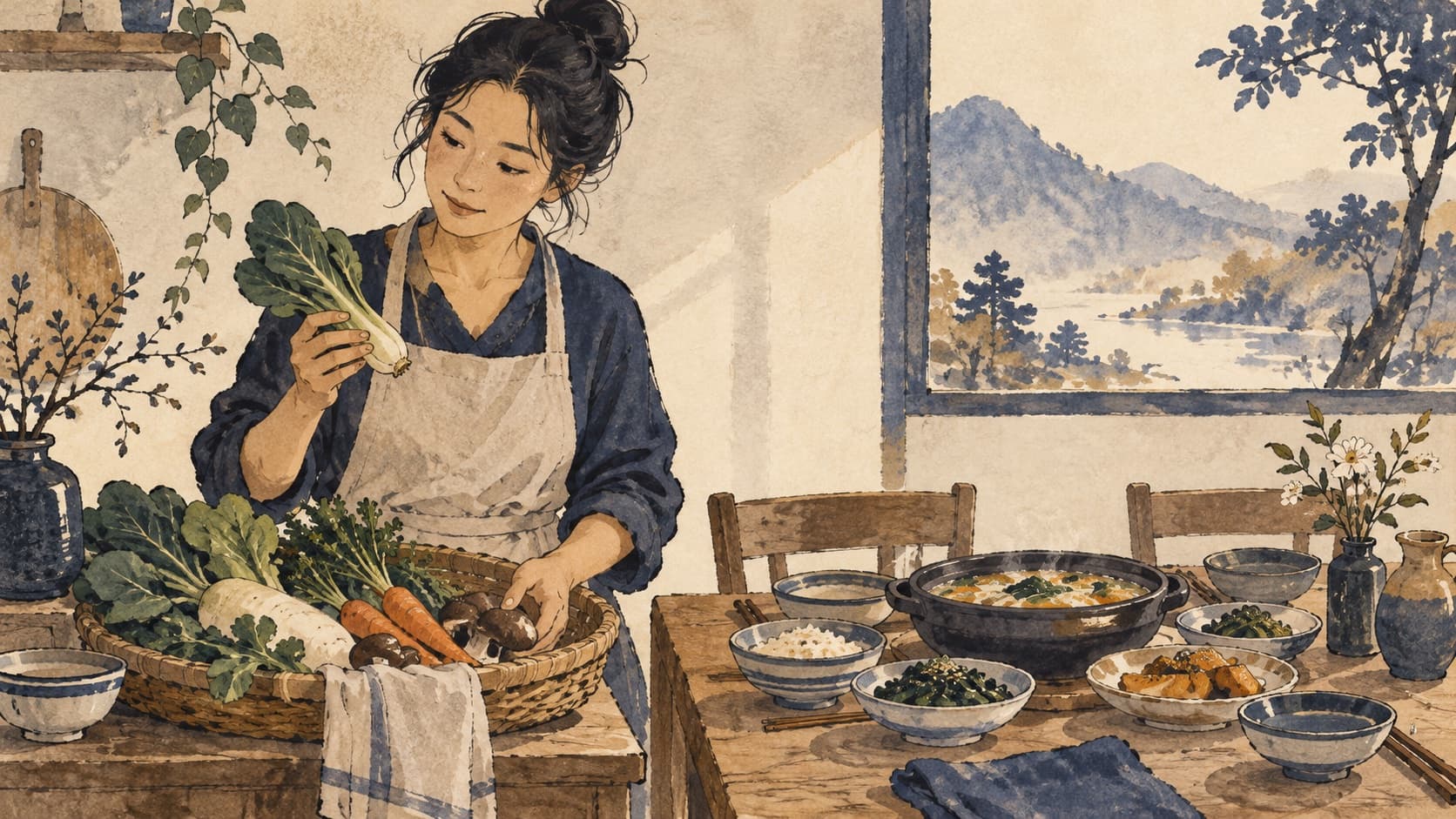
Hexagram 27, Yi or Nourishment, asks what is being nourished and how nourishment is obtained. The Great Image joins care in speech with moderation in eating and drinking. A modern reading can consider habits and responsibilities, but the hexagram does not diagnose nutritional needs or prescribe a diet.
Overview
Nourishment includes more than acquiring something desirable. The chapter repeatedly distinguishes sources, direction, and responsibility. It is useful to ask both what supports you and what your attention supports in return. These are reflective questions, not a promise that a particular routine will produce a certain outcome.
The Judgment: look at the source of nourishment
The fixed Chinese digital transcription distinguishes the Judgment, Commentary on the Judgment, Great Image, and line statements.
The Judgment connects a favorable judgment with constancy and directs attention toward nourishment and what fills the mouth. The Commentary distinguishes what someone nourishes from how that person nourishes themselves, then broadens the scope toward sustaining others.
A modern analogy might involve the information, commitments, or conversations you repeatedly take in. That extension is editorial, not a claim that the ancient passage explicitly describes modern media. Assess any proposed habit by its actual effects. The text is not evidence that a food is suitable for a medical condition or that restricting it would improve health.
Mountain above thunder: restraint and movement
In the pinned Chinese chapter, hexagram 27 is 27-yi, with Thunder below and Mountain above. Count positions from bottom to top; 1 means a solid line and 0 a broken line. Its stored pattern is 100001. That identifies the figure, not a personal outcome.
The Great Image names thunder beneath the mountain and pairs careful speech with measured eating and drinking. The juxtaposition offers a useful practical distinction: not everything that can be consumed or said needs to be. Careful speech does not mean silencing a necessary concern, and moderation here should not be turned into a detailed health prescription.
Six line settings: read the particular position
The following are original modern English orientation notes on the six statements in the linked Chinese transcription. They are not a certified translation or six future events in sequence:
- Line 1: Abandoning one's numinous tortoise while watching another's moving jaw has an unfavorable judgment. The contrast concerns looking away from one's own resource toward another's consumption.
- Line 2: The second position describes nourishment turned upside down and departing from the usual course. Its unfavorable movement belongs to this particular setting.
- Line 3: The third position opposes nourishment and includes a ten-year prohibition. Preserve the strong textual warning without converting the number into a personal calendar forecast.
- Line 4: The fourth again uses reversed nourishment but gives a favorable judgment, with a tiger's intent gaze. Similar wording can carry a different judgment at another position.
- Line 5: The fifth favors remaining constant and says not to cross the great river. Distinguish that specific restraint from the next line's different statement.
- Line 6: The upper line concerns the source through which nourishment comes and allows crossing the great river despite danger. Responsibility and position change the setting.
For a cast with a changing line, use the changing-lines guide and read that precise position in context.
A fictional example: choosing a sustainable information habit
A fictional student spends each study break moving between several news feeds and returns unable to name what she has learned. She uses the nourishment theme to ask what the habit is supplying: useful knowledge, diversion, or simply more stimulation.
She chooses one clearly bounded reading period and writes down one useful point afterward. The experiment is small and reversible. It is not a clinical treatment or a claim that the hexagram proves social media is harmful. If the change does not help, she checks the observation and adjusts it. The important distinction is between a reflective metaphor and evidence about her actual experience.
Questions for a practical modern reflection
These prompts are modern editorial reflection, separate from the quoted classical text and its historical commentary:
- What does this repeated habit actually supply?
- Who or what am I sustaining through my attention?
- Which useful concern needs careful words rather than more words?
Choose one small action you can assess with ordinary evidence. Record what happened without treating a favorable symbol as proof that the action will work. If your observation contradicts your first interpretation, preserve the observation rather than forcing it into the text.
Use this chapter without changing the cast
Start with the question as it was actually asked. Identify the recorded primary hexagram, then any actual changing positions and relating figure. This explanatory article does not cast, choose a line, or infer a new figure. Keep the original cast separate from the interpretation you are exploring.
Read the Judgment for its broad setting, the relevant line for its particular context, and the Image as a distinct commentary layer. The reading guide provides a learning path. The English notes and fictional example here are original editorial material based on a public digital transcription. They do not certify an ancient edition or use unreviewed Gao Heng annotations.
Key takeaways
- Nourishment concerns sources and responsibilities.
- Similar line wording can have different judgments.
- The text does not prescribe a personal diet.
Conclusion
Yi directs attention to sources and responsibility. Notice what you take in and what you sustain, while keeping symbolic reflection separate from health claims and specific outcome predictions.
Is Hexagram 27 mainly about food?
Food and the mouth are explicit images, while the Commentary broadens nourishment toward sustaining others. Further applications should be labeled modern reflection.
Does the third line mean ten literal years?
Its number belongs to the ancient statement. This article does not turn it into a forecast of how long your situation will last.
Can I use it to choose a treatment or diet?
The chapter cannot establish medical suitability. Use appropriate professional guidance and relevant evidence for health decisions.
Sources
Reflect on one question
Frame a focused question before starting a new reading.
Explore YiInsight →