 YiInsight
YIINSIGHT / Canonical hexagram
Hexagram 18: Repairing Neglect and Preparing a Better Continuation
Understand hexagram 18: Repair of accumulated neglect. Read the Judgment, six line settings, structural image, and a clearly labeled modern example.
Hexagram 18: 蠱 · gǔ
Wind below Mountain. Lines are numbered from the bottom upward.
The short answer
Hexagram 18, Gu, addresses what has been spoiled or neglected and the work of putting it right. Its Judgment links an undertaking with attention before and after a turning point. The lines distinguish active repair, indulgence, recognition, and a choice to serve a different purpose.
Overview
Hexagram 18 becomes easier to read when its different textual layers remain visible. Start with the broad situation described by the Judgment. Then identify the particular position named in your recorded cast. The Image commentary offers another perspective, and a modern example can help you test an interpretation against ordinary experience. This guide uses that sequence to explore repair of accumulated neglect. Read the chapter as a set of distinctions: what is happening, where you stand, which action fits that position, and what observable result would make you revise your interpretation.
The Judgment: Repair of accumulated neglect
The fixed Chinese digital transcription distinguishes the Judgment, Commentary on the Judgment, Great Image, and line statements.
The Judgment presents a substantial undertaking and names three days before and three days after the day Jia. This timing language belongs to the text's calendrical setting. A modern reflection can use its before-and-after structure without treating it as a guaranteed personal six-day schedule.
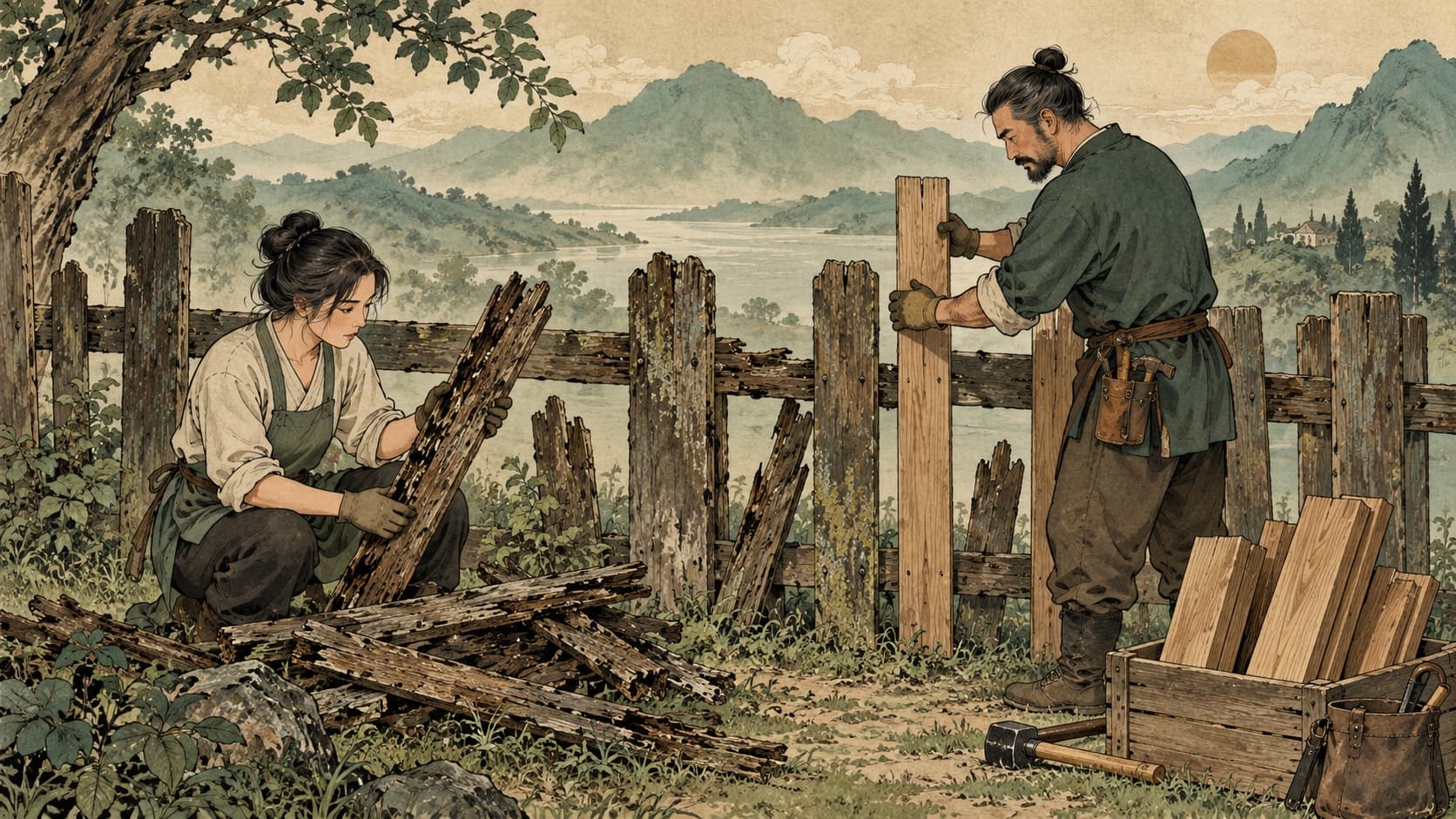
The chapter asks for work on a condition that has accumulated. Repair begins with understanding how the condition arose and what now keeps it in place. Replacing a visible part may help, but it may also leave the underlying practice untouched. Preparation and follow-through are therefore as important as the moment of intervention.
Several lines refer to a father's or mother’s spoilage. These inherited-setting images do not establish that a modern parent caused a person's difficulties. They can help a reader think about a practice received from earlier circumstances while keeping actual responsibility grounded in evidence. The line about indulging the condition provides a clear contrast with the lines about undertaking its repair.
Read the structural image in context
In the pinned Chinese chapter, hexagram 18 is 18-gu, with Wind below and Mountain above. Count positions from bottom to top; 1 means a solid line and 0 a broken line. Its stored pattern is 011001. That identifies the figure, not a personal outcome.
Wind below mountain supports the Great Image's concern with stirring people and cultivating virtue. This commentary moves beyond the damaged object toward the practices that sustain a community. A repair may require instruction, renewed attention, or a clearer assignment of responsibility.
Distinguish preservation from neglect. Some old arrangements remain useful; others persist only because no one has examined them. The work is to identify which is which. Keep what is sound, repair what is damaged, and record what should be checked after the intervention.
Six line settings: read the particular position
The following are original modern English orientation notes on the six statements in the linked Chinese transcription. They are not a certified translation or six future events in sequence:
- Line 1: The first line undertakes repair of the father’s spoilage, acknowledging difficulty yet allowing a favorable end. Begin the work without pretending it is effortless.
- Line 2: The second line addresses the mother’s spoilage and limits rigid insistence. Context matters when repairing an inherited pattern.
- Line 3: The third line again undertakes repair and allows some regret without great blame. Imperfect corrective work differs from leaving the condition untouched.
- Line 4: The fourth line indulges or lets the spoilage continue and meets regret. Accommodation can preserve the very problem that needs attention.
- Line 5: The fifth line repairs and receives praise. Recognition follows the quality of the work rather than replacing it.
- Line 6: The top line declines service to kings and nobles and esteems its own undertaking. A different purpose can be legitimate; the image is not a command to abandon every responsibility.
For a cast with a changing line, use the changing-lines guide and read that precise position in context.
A fictional modern example
A small club discovers that its equipment cupboard contains broken tools, duplicate purchases, and no clear inventory. Members have adapted by bringing their own tools, so the cupboard's condition has been easy to ignore.
Two volunteers inspect each item and separate usable equipment from items needing repair. They then ask why the problem accumulated. The answer includes an unclear return process and no scheduled inspection. The club assigns a return shelf and a brief monthly check instead of treating one afternoon of tidying as a permanent solution.
The example illustrates preparation, corrective work, and follow-through. It is fictional, and its practical claim is limited: examining the sustaining process can make a repair more coherent. Whether the new routine works remains a question for later observation.
Questions for a practical modern reflection
These prompts are modern editorial reflection, separate from the quoted classical text and its historical commentary:
- What has accumulated rather than happened all at once?
- Which inherited practice remains useful, and which sustains the problem?
- What will you check after the visible repair is complete?
Choose one small action you can assess with ordinary evidence. Record what happened without treating a favorable symbol as proof that the action will work. If your observation contradicts your first interpretation, preserve the observation rather than forcing it into the text.
Use this chapter without changing the cast
Start with the question as it was actually asked. Identify the recorded primary hexagram, then any actual changing positions and relating figure. This explanatory article does not cast, choose a line, or infer a new figure. Keep the original cast separate from the interpretation you are exploring.
Read the Judgment for its broad setting, the relevant line for its particular context, and the Image as a distinct commentary layer. The reading guide provides a learning path. The English notes and fictional example here are original editorial material based on a public digital transcription. They do not certify an ancient edition or use unreviewed Gao Heng annotations.
Key takeaways
- Repair of accumulated neglect is the chapter-level theme, not a guaranteed outcome.
- Read the actual changing position rather than combining all six into a prediction.
- Keep classical text, commentary, and the fictional modern example distinct.
Conclusion
Return to the actual question and the precise line, if any, before drawing a conclusion from hexagram 18. Its central concern here is repair of accumulated neglect. Choose a modest interpretation that you can explain in plain language, identify one observable next step, and keep a record of what happened. The text supplies a lens; the outcome still needs to be observed.
What does hexagram 18 mean?
Hexagram 18, Gu, addresses what has been spoiled or neglected and the work of putting it right. Its Judgment links an undertaking with attention before and after a turning point. The lines distinguish active repair, indulgence, recognition, and a choice to serve a different purpose.
Do all six lines of hexagram 18 apply to my reading?
The six positions show different settings. Begin with the line or lines actually recorded as changing in your cast. When none change, read the primary figure and the chosen method consistently; do not invent a changing line to obtain a preferred answer.
How should I use the modern example?
Use it to understand a distinction in the chapter. It is an invented teaching example, not a documented reading outcome or a prediction about your situation. Replace its details with facts you can actually observe.
Sources
Reflect on one question
Frame a focused question before starting a new reading.
Explore YiInsight →