 YiInsight
YIINSIGHT / Canonical hexagram
Hexagram 16 Meaning: Enthusiasm That Can Become Organized Action
Explore hexagram 16, Yu: Thunder over Earth, the classical setting of music and mobilization, six lines, and a modern example of coordinated enthusiasm.
Hexagram 16: 豫 · yù
Earth below Thunder. Lines are numbered from the bottom upward.
The short answer
Hexagram 16, Yu or Enthusiasm, explores movement that gathers support while also showing the risks of display, hesitation, and losing awareness. A modern reflection can ask how energy becomes a coordinated task. Enthusiasm is not evidence that a plan is sound, and the chapter's historical military and illness language is not contemporary military or medical advice.
Overview
A shared sense of excitement can help people begin. It can also obscure a missing arrangement, an uncertain commitment, or a problem no one wants to name. Yu allows those possibilities to be examined together. The chapter is not uniformly celebratory: its six statements distinguish announcing enthusiasm, steadiness, looking upward, gathering others, a constrained condition, and a possible change from darkness.
The Judgment: mobilization belongs to an ancient setting
The fixed Chinese digital transcription distinguishes the Judgment, Commentary on the Judgment, Great Image, and line statements.
The Judgment names the usefulness of establishing a lord and moving an army. These are political and military features of the classical passage. The Commentary on the Judgment discusses responsive movement and larger patterns of order. Neither layer should become an endorsement of force, a modern leader, or a campaign simply because people feel inspired.
A cautious contemporary paraphrase asks how movement is organized. Who is responding to what? Is there a shared purpose? Does the proposed action match the participants' ability and consent? Energy can support a task, but it does not supply the evidence that the task is appropriate. Read the ancient setting explicitly, then label any modern application as an editorial reflection rather than a direct instruction from the text.
Thunder over Earth: shared rhythm and meaningful preparation
In the canonical structural registry, hexagram 16 is 16-yu, with Earth below and Thunder above. Count positions from bottom to top; 1 means a solid line and 0 a broken line. Its stored pattern is 000100. That identifies the figure, not a personal outcome.
The Great Image describes thunder emerging from the earth and ancient rulers making music, honoring virtue, and offering it in a ritual setting with ancestors. This historical religious and musical commentary is a distinct layer. A modern example can explore rhythm as coordination: people know when to begin, what part to play, and how to listen to others. The analogy should not claim that music, excitement, or a collective mood proves a group's moral authority.
Six line settings: read the particular position
The following are original modern English orientation notes on the six statements in the linked Chinese transcription. They are not a certified translation or six future events in sequence:
- Line 1: The first describes proclaimed enthusiasm with an unfavorable judgment. Consider the gap between displaying excitement and having something dependable to do; a loud announcement is not a completed plan.
- Line 2: The second is firm as a rock and does not wait out the whole day, with favorable constancy. A modern note can examine recognizing a relevant condition promptly without pretending to predict it.
- Line 3: The third associates looking upward for enthusiasm with regret and includes regret in delay. Dependence and hesitation are possible themes, but neither clause decides a particular timetable for you.
- Line 4: The fourth is a source of enthusiasm and great attainment, with companions coming together. The pinned transcription records a textual variant at the final word; this orientation does not resolve the variant or certify an edition.
- Line 5: The fifth includes illness and continuing without dying. That is classical language within this position, not a medical prognosis or an instruction to dismiss symptoms or treatment.
- Line 6: The sixth describes darkened enthusiasm and a change after completion, with no blame. It leaves room for correction when awareness has been lost; it does not require staying loyal to an exciting but unworkable plan.
For a cast with a changing line, use the changing-lines guide and read that precise position in context.
A fictional example: turn a rehearsal's energy into a shared plan
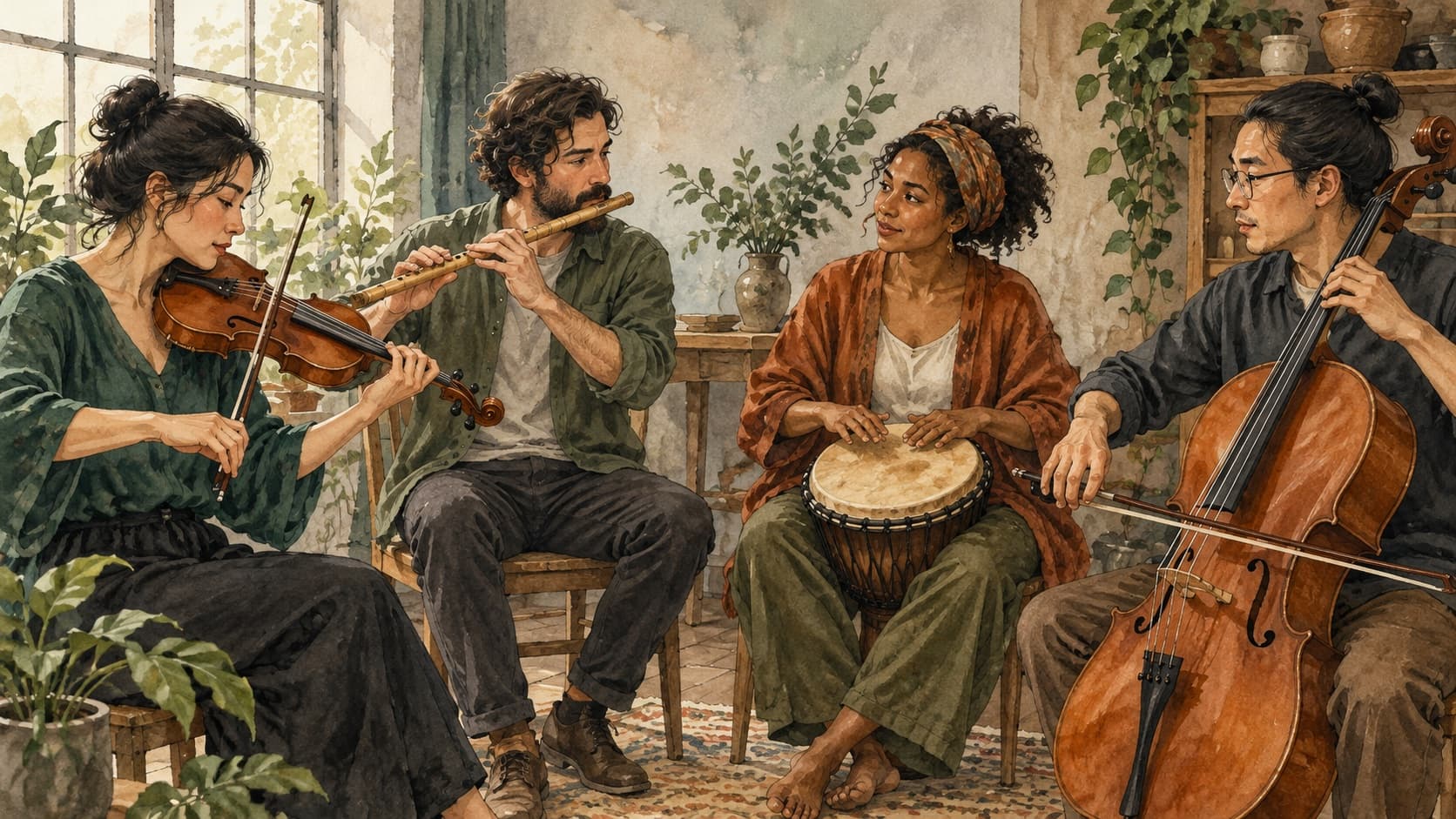
Imagine four amateur musicians who enjoy their first rehearsal and immediately want to organize a public performance. This is a fictional illustration of reflection, not a documented reading outcome.
An Enthusiasm reflection distinguishes the enjoyable mood from the practical arrangement. They choose a short program, agree who leads each piece, and schedule a second rehearsal to hear what still needs work. They check the venue's conditions before promising a date. Shared energy becomes support for a specific task rather than proof that the performance is already ready.
When one piece remains uneven, they simplify it or leave it out. That correction does not mean the original enthusiasm was false. It means that feeling and preparation answer different questions. The result can be assessed through the rehearsal and the agreements people actually keep.
Questions for a practical modern reflection
These prompts are modern editorial reflection, separate from the quoted classical text and its historical commentary:
- What specific task is my enthusiasm supporting?
- What remains unprepared beneath the shared excitement?
- Are the participants' roles and commitments explicit?
- What evidence would tell us to revise the plan while preserving useful energy?
Choose one small action you can assess with ordinary evidence. Record what happened without treating a favorable symbol as proof that the action will work. If your observation contradicts your first interpretation, preserve the observation rather than forcing it into the text.
Use this chapter without changing the cast
Start with the question as it was actually asked. Identify the recorded primary hexagram, then any actual changing positions and relating figure. This explanatory article does not cast, choose a line, or infer a new figure. Keep the original cast separate from the interpretation you are exploring.
Read the Judgment for its broad setting, the relevant line for its particular context, and the Image as a distinct commentary layer. The reading guide provides a learning path. The English notes and fictional example here are original editorial material based on a public digital transcription. They do not certify an ancient edition or use unreviewed Gao Heng annotations.
Key takeaways
- Enthusiasm can support preparation but cannot replace it.
- The chapter includes warnings about display, hesitation, and lost awareness.
- Historical military and illness phrases are not modern operational or medical guidance.
Conclusion
Yu helps distinguish coordinated movement from excitement alone. Keep its ancient setting and varied line positions visible, then use a modern reflection to make purpose, preparation, and consent concrete. A workable plan can carry enthusiasm without depending on it as proof.
Does hexagram 16 mean my plan will succeed?
No. A favorable setting or an excited group does not verify a plan. Check resources, responsibilities, consent, and the actual work.
Should I follow the person who inspires everyone?
Inspiration is one observable influence, not a certificate of competence or authority. Assess the person's actions and the arrangement independently.
Is the illness statement in line 5 a health prediction?
No. The line's language should remain identified as classical text. It cannot diagnose symptoms, predict survival, or determine whether treatment is needed.
Sources
Reflect on one question
Frame a focused question before starting a new reading.
Explore YiInsight →