 YiInsight
YIINSIGHT / Canonical hexagram
Hexagram 14 Meaning: Da You, Great Possession, and Responsible Abundance
Understand hexagram 14, Da You, through its classical Judgment, Fire over Heaven Image, six lines, and a practical reflection on using resources responsibly.
Hexagram 14: 大有 · dà yǒu
Heaven below Fire. Lines are numbered from the bottom upward.
The short answer
Hexagram 14, Da You, is commonly called Great Possession. Its brief Judgment is favorable, while the Image connects abundance with restraining harm and promoting good. A modern reading can ask how to use available resources well. It does not establish that money, status, or success is guaranteed.
Overview
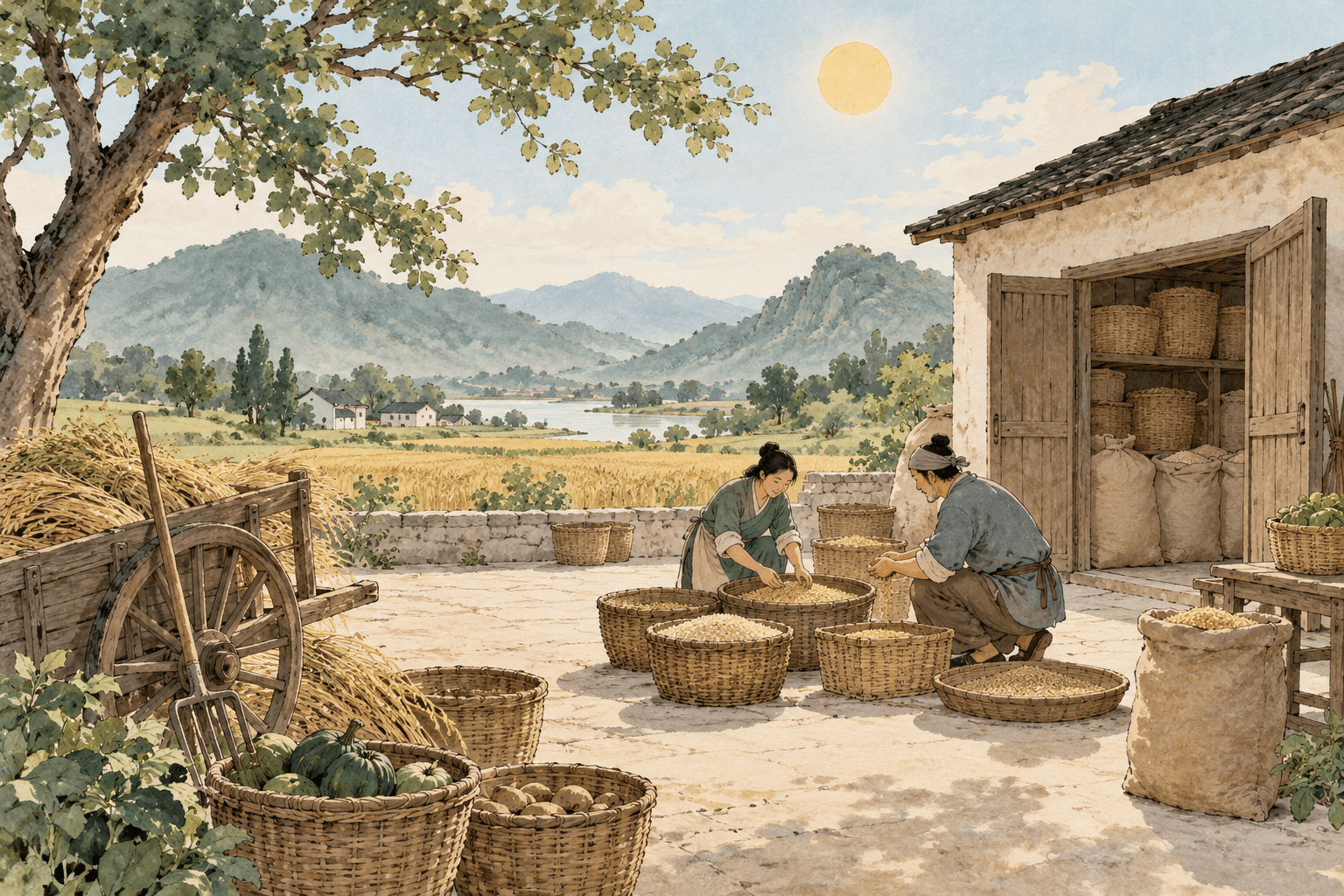
Having more creates a second question: what should you do with it? Hexagram 14 is useful for exploring that tension. Resources might mean money, knowledge, time, influence, or support. Possession gives you options, but it also exposes the difference between making something possible and making it beneficial. Read the text in its layers before turning it into advice.
The classical Judgment is short; the interpretation is larger
The fixed Chinese transcription of Da You gives the Judgment as “大有:元亨.” An original modern paraphrase is: Great Possession; great progress or success. James Legge’s historic English rendering also presents a favorable opening.
That short statement does not specify an investment return, promotion, inheritance, or deadline. Those would be additional claims. The useful interpretive question is what kind of abundance exists in your situation and whether you can handle it. This question is YiInsight’s modern reflection, rather than an extra sentence in the Judgment.
The Image: Fire above Heaven, with an ethical direction
Da You has Heaven below and Fire above. The separately labeled Image commentary describes fire above Heaven and directs the exemplary person to restrain harm and promote good. It also speaks of following Heaven’s favorable mandate. This belongs to the classical commentary layer, not the two-character Judgment.
A modern paraphrase can connect illumination with responsibility: make good use of what is available and notice what it could damage. Visibility alone does not settle whether a choice is sound. The Image gives abundance an ethical direction; it is more demanding than simply celebrating that you have more.
A concise overview of the six lines
These brief summaries follow the Chinese statements alongside Legge’s historic rendering. They are orientation notes, not personal predictions:
- Line 1 introduces avoiding harm and recognizing difficulty. Having a favorable situation does not remove the need for care.
- Line 2 uses a loaded wagon. The image brings capacity and the ability to carry something into view.
- Line 3 places a lord before the ruler; the text distinguishes a person capable of the role from one unequal to it.
- Line 4 concerns restraint around great resources in Legge’s reading. The Chinese witnesses preserve variant characters here.
- Line 5 combines reciprocated sincerity with appropriate dignity or authority. Trust and responsibility belong together.
- Line 6 describes help from Heaven and a favorable result within the classical symbolism. It is not a measurable guarantee.
The lines add circumstances that the short Judgment cannot supply. If your reading contains a changing line, use the changing-lines guide before applying every line at once.
A fictional example: a budget can grow faster than judgment
Imagine Maya, a fictional community organizer, receives a larger event budget. Her first impulse is to book an expensive venue because the organization can finally afford it. Yet the volunteer team is already stretched, and attendees need transport more than a prestigious address.
As a modern reflection on hexagram 14, she identifies what the increased resources should accomplish. She reserves transport funds, keeps the event manageable, and publishes spending criteria. This illustrates responsible abundance; it does not demonstrate that the hexagram caused the funding or predicted the outcome.
The tension is specific: a bigger budget expands possibility, but a larger visible project could consume the people it is meant to help. The next step is not automatic expansion. It is choosing what the available resources can support well.
Questions that turn abundance into a practical decision
Use these questions as an editorial reflection exercise:
- What do I actually have, rather than hope to receive?
- What obligation comes with these resources or this influence?
- Who benefits, and who bears the hidden cost?
- What would restraint protect?
- Can I explain the purpose of the next commitment?
Write one action you control, such as clarifying a budget or checking capacity. Then identify the evidence you need before taking it. For help keeping the original question, changing lines, and relating hexagram distinct, see how to read an I Ching reading.
Key takeaways
- The Judgment is favorable but does not name a financial outcome.
- The Image connects resources with restraining harm and promoting good.
- Read a relevant changing line before making a situation-specific interpretation.
Conclusion
Hexagram 14 offers a favorable starting point and a demanding question about how abundance is used. Keep its Judgment, Image, and line statements separate from modern applications. That makes room for confidence without turning a symbolic reading into a promise of wealth.
Does hexagram 14 mean I will become rich?
It does not establish that outcome. Great Possession can prompt reflection on resources already present, but the text is not evidence of future income.
What distinguishes Da You from simply having enough?
The Image adds responsibility: restrain harm and promote good. In a modern application, the question becomes how available capacity serves a worthwhile purpose.
Does Fire above Heaven describe a physical event?
It names the upper and lower trigrams and the classical Great Image. The article treats that arrangement as source symbolism; it does not claim that a physical fire is occurring in the sky.
Sources
Reflect on one question
Frame a focused question before starting a new reading.
Explore YiInsight →