 YiInsight
YIINSIGHT / Canonical hexagram
Hexagram 12: Obstruction and Preserving a Sound Course
Understand hexagram 12: Obstruction without losing direction. Read the Judgment, six line settings, structural image, and a clearly labeled modern example.
Hexagram 12: 否 · pǐ
Earth below Heaven. Lines are numbered from the bottom upward.
The short answer
Hexagram 12, Pi, depicts a lack of communication between heaven and earth. The lines range from connected withdrawal and compromised accommodation to the easing and eventual overturning of obstruction. A practical reading separates a blocked setting from the conduct still within your control.
Overview
Hexagram 12 becomes easier to read when its different textual layers remain visible. Start with the broad situation described by the Judgment. Then identify the particular position named in your recorded cast. The Image commentary offers another perspective, and a modern example can help you test an interpretation against ordinary experience. This guide uses that sequence to explore obstruction without losing direction. Read the chapter as a set of distinctions: what is happening, where you stand, which action fits that position, and what observable result would make you revise your interpretation.
The Judgment: Obstruction without losing direction
The fixed Chinese digital transcription distinguishes the Judgment, Commentary on the Judgment, Great Image, and line statements.
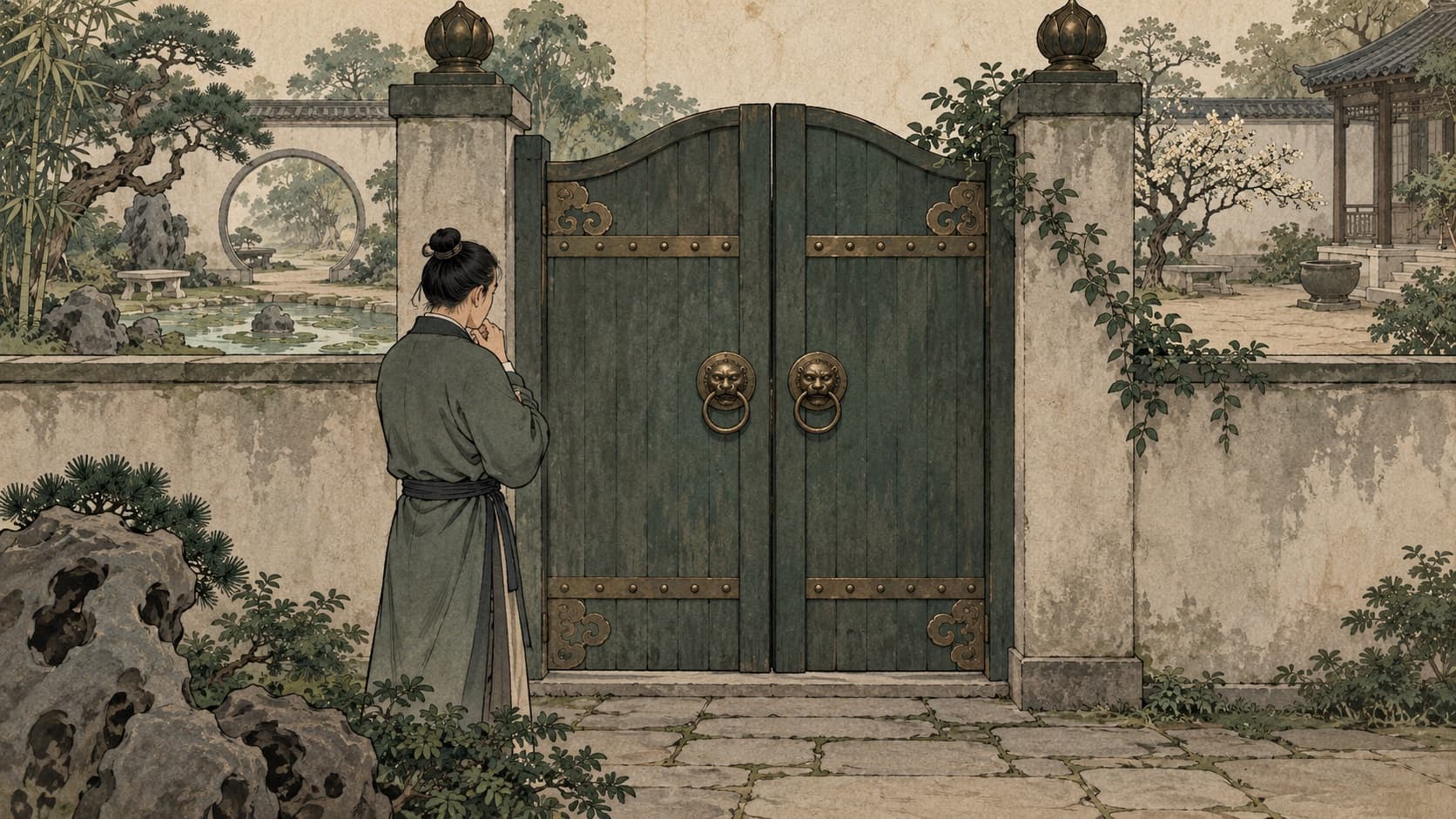
The Judgment's movement reverses the language of Tai: the great departs and the small arrives. The Commentary explains the setting through heaven and earth failing to meet and upper and lower failing to communicate. This is a description of obstruction, not a judgment that a person is permanently unsuccessful.
The Great Image values restrained conduct during difficulty and warns against being enticed by reward. A modern reader can ask what a tempting concession would cost in clarity or integrity. Preserving a sound course may sometimes involve reducing an undertaking to what can honestly be done.
The chapter nevertheless includes change. Later positions show a mandate, the easing of obstruction, and its overturning. These are distinct settings, not a guarantee that a particular deadline will bring relief. Read the actual position before deciding whether to withdraw, prepare, or act. The fifth line's concern that the situation could fail again is especially relevant when conditions begin to improve.
Read the structural image in context
In the pinned Chinese chapter, hexagram 12 is 12-pi, with Earth below and Heaven above. Count positions from bottom to top; 1 means a solid line and 0 a broken line. Its stored pattern is 000111. That identifies the figure, not a personal outcome.
Earth below heaven forms the reverse arrangement of the preceding chapter. The Commentary interprets the relation as a failure of exchange. That provides a concrete diagnostic question: where does necessary information or cooperation stop?
An obstruction may arise from unclear responsibility, incompatible aims, or a missing channel. These are different problems and require different responses. The figure is a prompt to examine the relation, not proof of the cause. Record what has been tried and what response actually occurred before deciding that further effort is useful.
Six line settings: read the particular position
The following are original modern English orientation notes on the six statements in the linked Chinese transcription. They are not a certified translation or six future events in sequence:
- Line 1: The first line uses connected grass roots and favors correctness. Individual conduct can affect a wider group even in withdrawal.
- Line 2: The second line distinguishes accommodation that benefits a lesser person from the stance of a greater person. Do not turn these historical categories into labels for people you dislike.
- Line 3: The third line contains shame. Ask whether a compromise is being accepted without acknowledging its cost.
- Line 4: The fourth line acts with a mandate and shares benefit with its companions. Authority and a workable opening matter.
- Line 5: The fifth line eases obstruction but repeatedly remembers possible loss and binds to mulberry roots. Stabilize an improvement rather than taking it for granted.
- Line 6: The top line overturns obstruction, moving from blockage to joy. Read the change in its position, not as a promised date of rescue.
For a cast with a changing line, use the changing-lines guide and read that precise position in context.
A fictional modern example
A volunteer editor cannot finish a newsletter because three departments send conflicting versions of the same event details. Repeatedly asking for the final version has not resolved who decides. She pauses layout work and writes down the specific fields that conflict.
The organizer assigns one person to confirm those fields. Once that person responds, the editor can resume. She also records the approval process for the next issue so that the new opening is less fragile.
The example distinguishes a blocked relationship from a lack of effort. It does not require the editor to call the departments bad people. The useful change is an observable channel of responsibility; if that channel fails again, the record makes the next diagnosis more precise.
Questions for a practical modern reflection
These prompts are modern editorial reflection, separate from the quoted classical text and its historical commentary:
- Where does communication or responsibility stop?
- What can you preserve without accepting an inaccurate claim?
- If an opening appears, how can it be made less fragile?
Choose one small action you can assess with ordinary evidence. Record what happened without treating a favorable symbol as proof that the action will work. If your observation contradicts your first interpretation, preserve the observation rather than forcing it into the text.
Use this chapter without changing the cast
Start with the question as it was actually asked. Identify the recorded primary hexagram, then any actual changing positions and relating figure. This explanatory article does not cast, choose a line, or infer a new figure. Keep the original cast separate from the interpretation you are exploring.
Read the Judgment for its broad setting, the relevant line for its particular context, and the Image as a distinct commentary layer. The reading guide provides a learning path. The English notes and fictional example here are original editorial material based on a public digital transcription. They do not certify an ancient edition or use unreviewed Gao Heng annotations.
Key takeaways
- Obstruction without losing direction is the chapter-level theme, not a guaranteed outcome.
- Read the actual changing position rather than combining all six into a prediction.
- Keep classical text, commentary, and the fictional modern example distinct.
Conclusion
Return to the actual question and the precise line, if any, before drawing a conclusion from hexagram 12. Its central concern here is obstruction without losing direction. Choose a modest interpretation that you can explain in plain language, identify one observable next step, and keep a record of what happened. The text supplies a lens; the outcome still needs to be observed.
What does hexagram 12 mean?
Hexagram 12, Pi, depicts a lack of communication between heaven and earth. The lines range from connected withdrawal and compromised accommodation to the easing and eventual overturning of obstruction. A practical reading separates a blocked setting from the conduct still within your control.
Do all six lines of hexagram 12 apply to my reading?
The six positions show different settings. Begin with the line or lines actually recorded as changing in your cast. When none change, read the primary figure and the chosen method consistently; do not invent a changing line to obtain a preferred answer.
How should I use the modern example?
Use it to understand a distinction in the chapter. It is an invented teaching example, not a documented reading outcome or a prediction about your situation. Replace its details with facts you can actually observe.
Sources
Reflect on one question
Frame a focused question before starting a new reading.
Explore YiInsight →