 YiInsight
YIINSIGHT / Canonical hexagram
Hexagram 11: Peace Through Exchange and Cooperation
Understand hexagram 11: Peace sustained by exchange. Read the Judgment, six line settings, structural image, and a clearly labeled modern example.
Hexagram 11: 泰 · tài
Heaven below Earth. Lines are numbered from the bottom upward.
The short answer
Hexagram 11, Tai, presents a favorable meeting of heaven and earth. Its Commentary emphasizes communication between upper and lower, while the lines show association, inclusive conduct, changing conditions, and the limits of force. Peace here is an active relationship that needs care.
Overview
Hexagram 11 becomes easier to read when its different textual layers remain visible. Start with the broad situation described by the Judgment. Then identify the particular position named in your recorded cast. The Image commentary offers another perspective, and a modern example can help you test an interpretation against ordinary experience. This guide uses that sequence to explore peace sustained by exchange. Read the chapter as a set of distinctions: what is happening, where you stand, which action fits that position, and what observable result would make you revise your interpretation.
The Judgment: Peace sustained by exchange
The fixed Chinese digital transcription distinguishes the Judgment, Commentary on the Judgment, Great Image, and line statements.
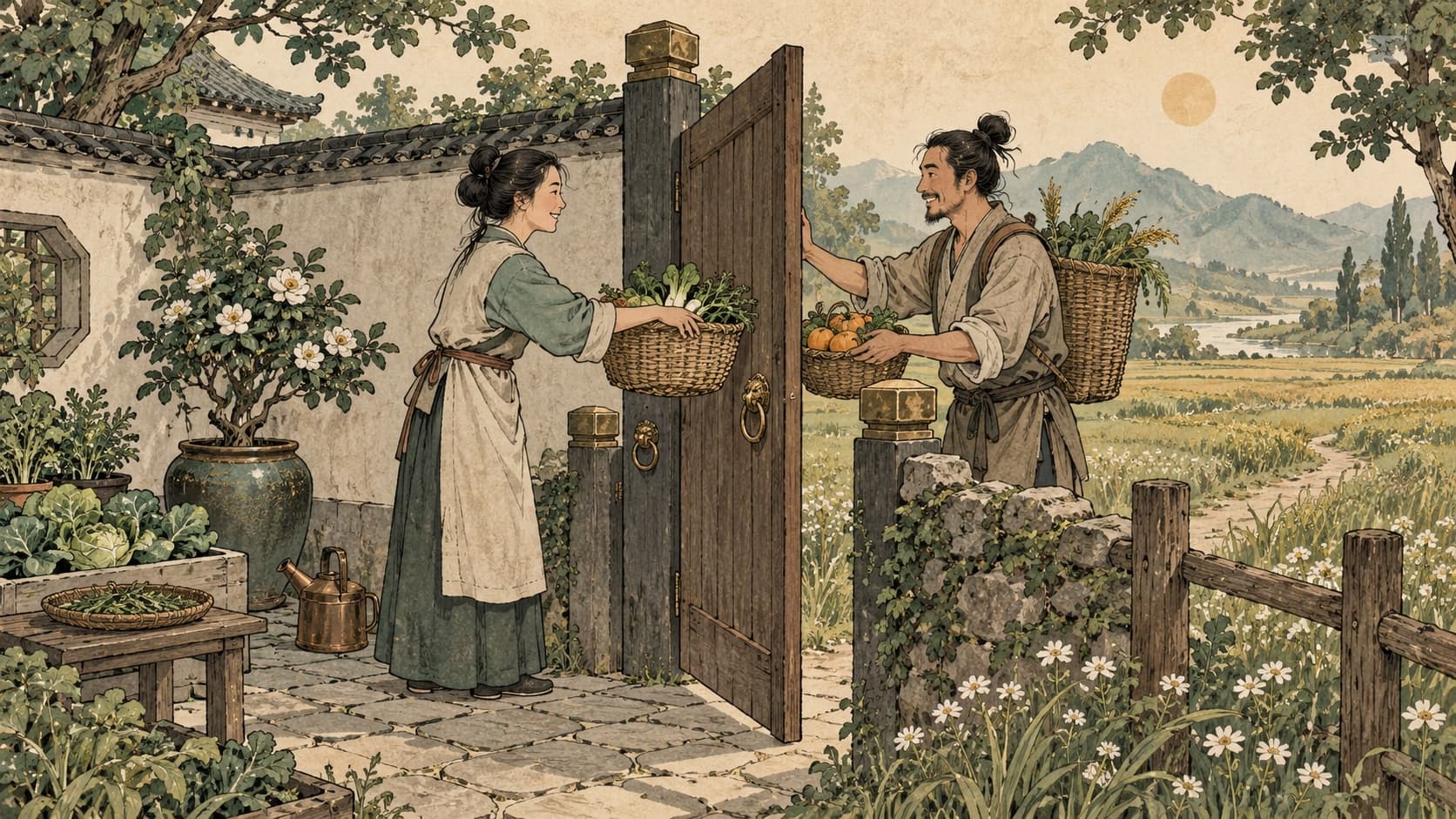
The Judgment describes the small departing and the great arriving, with favorable movement. The Commentary explains this through heaven and earth meeting and different levels communicating. Rather than treating peace as mere absence of noise, read it as a setting in which exchange is possible and intentions can become shared.
That setting creates an opportunity for useful work. People can ask questions, offer resources, and make arrangements that would be harder during obstruction. The second line's range of images also makes inclusion important: a broad undertaking should not overlook what is distant or retreat into a narrow circle of favorites.
The chapter does not describe permanent ease. Its third line explicitly places slopes after level ground and return after departure. Its final line describes a city wall falling back into the moat. These images ask the reader to attend to maintenance and changing conditions while cooperation is available. A favorable phase still calls for judgment about what can actually be sustained.
Read the structural image in context
In the pinned Chinese chapter, hexagram 11 is 11-tai, with Heaven below and Earth above. Count positions from bottom to top; 1 means a solid line and 0 a broken line. Its stored pattern is 111000. That identifies the figure, not a personal outcome.
Heaven is below earth in the stored structure. The Commentary treats their meeting as the condition of passage and shared purpose. The Great Image describes helping the processes of heaven and earth take fitting form for people.
A modern application can focus on the quality of exchange. Are questions answered? Can a concern travel from the person doing the work to the person setting the plan? A smooth appearance can conceal poor communication, so examine the actual channels. Peace becomes useful when it allows differences to be heard and coordinated rather than simply kept out of view.
Six line settings: read the particular position
The following are original modern English orientation notes on the six statements in the linked Chinese transcription. They are not a certified translation or six future events in sequence:
- Line 1: The first line pulls a clump of grass whose roots connect with others. An initial movement may carry companions or wider consequences.
- Line 2: The second line combines broad inclusion, crossing, and a central course. Consider what a narrow alliance would leave out.
- Line 3: The third line reminds the reader that level ground gives way to slopes and departure to return. Care continues during favorable conditions.
- Line 4: The fourth line describes neighbors drawn together without relying on riches. Shared purpose can be more important than a display of resources.
- Line 5: The fifth line uses a historical marriage image involving Di Yi. Read its relational setting without turning it into a prediction about a modern marriage.
- Line 6: The top line shows the wall returning to the moat and says not to use the army. Recognize a changed condition rather than trying to preserve appearances through force.
For a cast with a changing line, use the changing-lines guide and read that precise position in context.
A fictional modern example
Two neighboring workshops agree to share a delivery area. Previously, each left materials wherever space appeared, and neither knew when the other needed access. A short weekly conversation reveals that their busiest periods rarely coincide.
They establish a simple schedule and leave a clear passage between the doors. The arrangement works because information and responsibility move between the two groups. When one workshop takes a larger order, they review the arrangement instead of assuming the original agreement will always fit.
This fictional example presents peace as a maintained exchange. The absence of an argument is only part of it; the more useful evidence is that each group can state its needs and adjust the shared practice. The chapter's changing conditions remain relevant even during a cooperative period.
Questions for a practical modern reflection
These prompts are modern editorial reflection, separate from the quoted classical text and its historical commentary:
- Where is useful exchange already possible?
- Whose needs might the current agreement overlook?
- What should be maintained or reviewed while conditions are favorable?
Choose one small action you can assess with ordinary evidence. Record what happened without treating a favorable symbol as proof that the action will work. If your observation contradicts your first interpretation, preserve the observation rather than forcing it into the text.
Use this chapter without changing the cast
Start with the question as it was actually asked. Identify the recorded primary hexagram, then any actual changing positions and relating figure. This explanatory article does not cast, choose a line, or infer a new figure. Keep the original cast separate from the interpretation you are exploring.
Read the Judgment for its broad setting, the relevant line for its particular context, and the Image as a distinct commentary layer. The reading guide provides a learning path. The English notes and fictional example here are original editorial material based on a public digital transcription. They do not certify an ancient edition or use unreviewed Gao Heng annotations.
Key takeaways
- Peace sustained by exchange is the chapter-level theme, not a guaranteed outcome.
- Read the actual changing position rather than combining all six into a prediction.
- Keep classical text, commentary, and the fictional modern example distinct.
Conclusion
Return to the actual question and the precise line, if any, before drawing a conclusion from hexagram 11. Its central concern here is peace sustained by exchange. Choose a modest interpretation that you can explain in plain language, identify one observable next step, and keep a record of what happened. The text supplies a lens; the outcome still needs to be observed.
What does hexagram 11 mean?
Hexagram 11, Tai, presents a favorable meeting of heaven and earth. Its Commentary emphasizes communication between upper and lower, while the lines show association, inclusive conduct, changing conditions, and the limits of force. Peace here is an active relationship that needs care.
Do all six lines of hexagram 11 apply to my reading?
The six positions show different settings. Begin with the line or lines actually recorded as changing in your cast. When none change, read the primary figure and the chosen method consistently; do not invent a changing line to obtain a preferred answer.
How should I use the modern example?
Use it to understand a distinction in the chapter. It is an invented teaching example, not a documented reading outcome or a prediction about your situation. Replace its details with facts you can actually observe.
Sources
Reflect on one question
Frame a focused question before starting a new reading.
Explore YiInsight →