 YiInsight
YIINSIGHT / Method and reflection
Wu Wei in Taoism: Tao Te Ching 37 and 48 in Context
Compare wu wei in Tao Te Ching chapters 37 and 48. Keep base text, Wang Bi’s commentary and editorial glosses separate with a simple reading worksheet.
The short answer
To read wu wei in Taoism in context, compare chapters 37 and 48 in this Wang Bi transcription. Chapter 37 pairs nonaction with wu bu wei and addresses rulers; chapter 48 contrasts learning and Dao, then returns to nonaction and governing.
Overview
What changes when you read wu wei alongside the phrases around it? This guide compares two identified chapters rather than using the term as a stand-alone instruction. Begin by distinguishing the Tao Te Ching from the I Ching if you are unsure which book you have opened.
Here the task is close reading: keep the Chinese base text, the identified commentary and your own explanation visibly separate. Our Sources and Editorial Method guide explains that source-layer habit. The exercise below uses one received Wang Bi transcription; it does not certify every manuscript or English edition.
Identify the source and chapter convention
The primary textual foundation for this close reading is the received transcription associated with Wang Bi, available in this identified digital transcription. In this transcription, numbered chapter headings contain the base text and separately bracketed commentary. In our structural framework, we must rigorously distinguish between the base classical lines attributed to Laozi and the subsequent commentary annotations. Furthermore, any interpretive translation we provide into English is designated as an EDITORIAL GLOSS rather than a definitive, universally verified quotation from a named translator. This distinction prevents the attribution of modern lexical baggage to ancient Chinese philosophical syntax. By isolating the base text from commentary, readers can observe what the identified annotation adds to a passage without assuming a monolithic historical consensus across all early manuscripts.
Chapter 37: nonaction with the following phrase and political setting
Chapter 37 in this transcription opens with the base line “道常無為” (Dao is constantly nonactive), paired immediately with the complementary phrase “而無不為” (yet there is nothing it does not do).
EDITORIAL GLOSS: In this context, the text pairs the metaphysical operation of Dao with specific political governance. Wang Bi’s commentary on the first line notes “順自然也” (following naturalness), while his commentary on the second line states “萬物無不由為以治以成之也” (the ten thousand things all rely on this functioning to be governed and completed).
The chapter then addresses rulers directly: “侯王若能守之,萬物將自化” (If marquises and kings can maintain this, the ten thousand things will transform themselves). When transformation stirs desires to act, the text introduces a stabilizing mechanism: “吾將鎮之以無名之樸” (I will anchor this with unnameable simplicity). Wang Bi’s commentary explains this as “不為主也” (not acting as master) and “無欲競也” (having no desire to contend). The chapter ends with “天下將自定”. Keep that governing context in your locator note instead of treating the opening as an isolated instruction about personal inactivity.
Chapter 48: decreasing and the pursuit of Dao
Chapter 48 begins with a learning–Dao contrast and later returns to language about governing. Its base text opens: “為學日益,為道日損” (Pursuing learning means daily increase; pursuing Dao means daily decrease).
EDITORIAL GLOSS: Wang Bi clarifies this distinction in his commentary, noting that pursuing learning seeks to “進其所能,益其所習” (advance what one is able to do and increase what one practices), whereas pursuing Dao seeks to “反虛無也” (return to emptiness and nothingness).
The text continues: “損之又損,以至於無為。無為而無不為” (Decrease and decrease again, until arriving at nonaction. Through nonaction, there is nothing left undone). Wang Bi’s annotation below this pivot reads “有為則有所失,故無為乃無所不為也”. As an editorial reading prompt, ask what this annotation adds to the relation between 有為 and 無為; keep it out of a quotation labeled as base text.
The chapter concludes with an administrative or operational maxim: “取天下常以無事,及其有事,不足以取天下” (Taking the empire is constantly achieved through non-interference; when one resorts to constant interference, one is insufficient to take the empire). Wang Bi glosses “無事” as “動常因也” (action always following conditions) and “有事” as “自己造也” (self-generated fabrication). Read this ending alongside the opening. The chapter’s learning–Dao contrast should not make its later governing language disappear from your notes.
Why the consulted scholar rejects total inaction
In section 7 of his Laozi entry, Alan K.L. Chan explicitly states that wuwei does not mean total inaction. He notes different translations and commentarial readings, and discusses self-serving desire in the Laozi’s treatment of the concept.
Record that account under the named scholar’s interpretation, rather than treating it as a quotation from the classical base text or evidence that every commentator agrees. Then return to the phrases you are comparing. Ask how this particular source relates nonaction to the following clause, and leave an unresolved question visible instead of replacing both clauses with a slogan.
A clearly invented close-reading worksheet
To practice disciplined textual navigation, consider an explicitly invented study notecard example for a fictional researcher named Jordan. Jordan is comparing how Chapters 37 and 48 structure the relationship between wu wei and governance or learning.
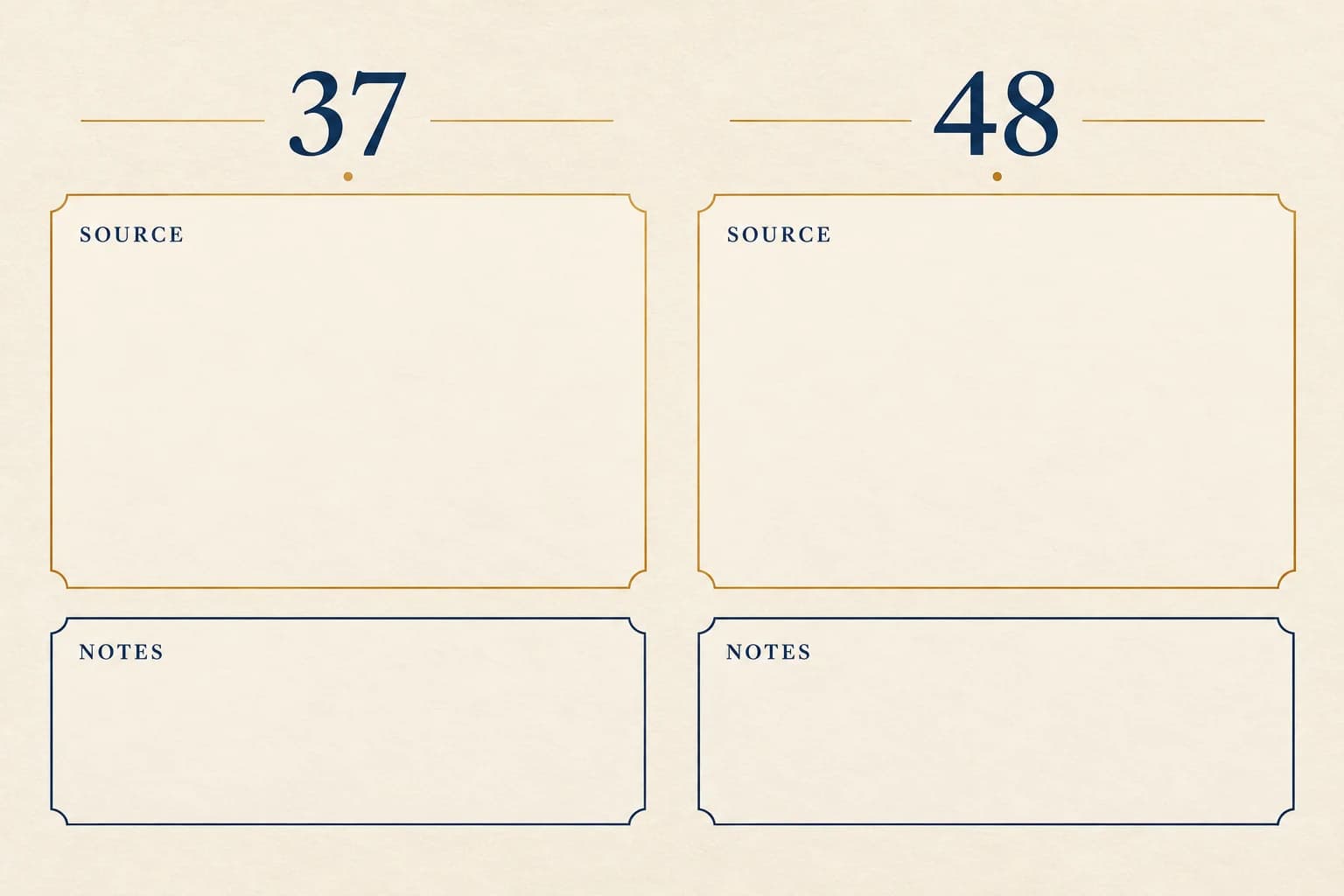
Jordan structures the worksheet across four mandatory fields: 1. Locator: Chapter 37, opening lines. 2. Base Quote: “道常無為,而無不為”. 3. Commentary Layer: Wang Bi’s notes on following naturalness and enabling the completion of the ten thousand things. 4. Editorial Gloss & Open Question: The text pairs metaphysical principle with ruler restraint. Open question: How does Wang Bi distinguish between the ruler’s unnameable simplicity and active administrative mastership?
This fictional exercise uses analytical questions about the text rather than commanding any halt to work or promising external life success. It grounds the reading in the literal structure of the received Wang Bi transcription without inventing historical anecdotes or clinical outcomes.
Key takeaways
- Chapter 37 places nonaction beside wu bu wei and addresses rulers in this received text.
- Chapter 48 contrasts learning and Dao, then returns to language about governing.
- Chan rejects total inaction in his account; that is not a verified consensus across every commentary.
Conclusion
Keep the chapter, Chinese phrase, identified annotation and your own explanation together. Chapter 37 addresses rulers; chapter 48 begins with a learning–Dao contrast and also speaks about governing. A useful note makes that comparison visible and leaves unresolved questions open. It does not turn two passages into a guaranteed rule for work or life.
What does the Wang Bi transcription say about Chapter 37?
The text states that Dao is constantly nonactive yet nothing is left undone, prompting rulers to maintain unnameable simplicity and quietude.
How does Wang Bi interpret Chapter 48’s distinction between learning and Dao?
Wang Bi notes that learning seeks to increase one’s abilities and practices, whereas pursuing Dao seeks to return to emptiness and reduce artificial fabrication.
How should I record a scholarly interpretation of wu wei?
Name the scholar and the section consulted, then keep that interpretation separate from the classical passage and your own reading notes.
Sources
Reflect on one question
Frame a focused question before starting a new reading.
Explore YiInsight →